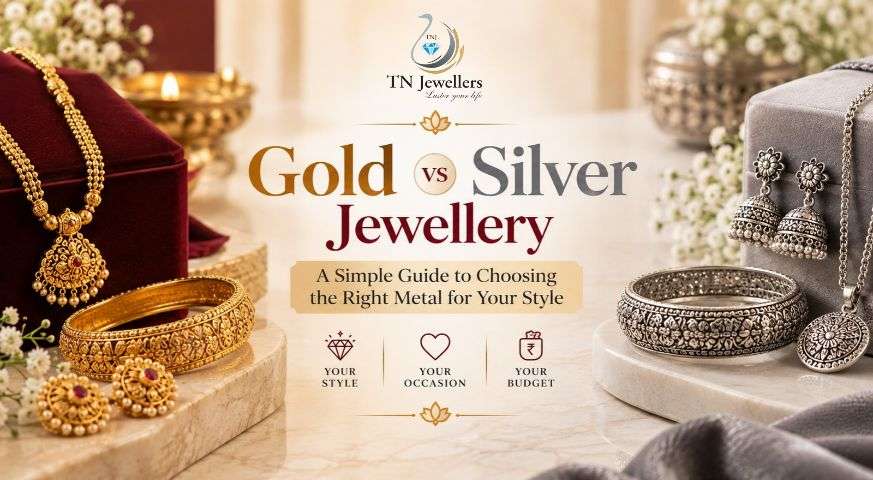
Buying gold jewellery is more than simply choosing a beautiful design. Whether you are purchasing a gold ring, necklace, earrings, bracelet, bangle, or any other piece, it is important to understand what you are paying for. Gold jewellery can be a meaningful investment, a part of a family tradition, or a special purchase for an important occasion.
With so many designs, purities, making charges, and pricing factors available, it can sometimes be difficult to know where to start. A little knowledge before visiting a jewellery store can help you make a more informed purchase and understand the value of the piece you choose.
This gold jewellery buying guide explains the important things to check before buying gold jewellery, from purity and hallmarking to weight, making charges, billing, and after-sales services.
1. Check the Gold Purity
One of the first things to check before buying gold jewellery is its purity. Gold jewellery is available in different levels of purity, and the purity affects the amount of actual gold present in the piece.
Common gold purities include 24K, 22K, 18K, and 14K. Pure 24K gold is very soft, which is why jewellery is often made using gold mixed with other metals to improve strength and durability.
For traditional Indian jewellery, 22K gold is commonly preferred because it contains a high proportion of gold while offering more strength than pure gold. 18K and 14K gold are often used for designs that require greater durability or for jewellery featuring gemstones.
Before purchasing, ask the jeweller about the exact purity of the gold and check that the information is clearly mentioned on the product and invoice.
2. Look for Hallmarking
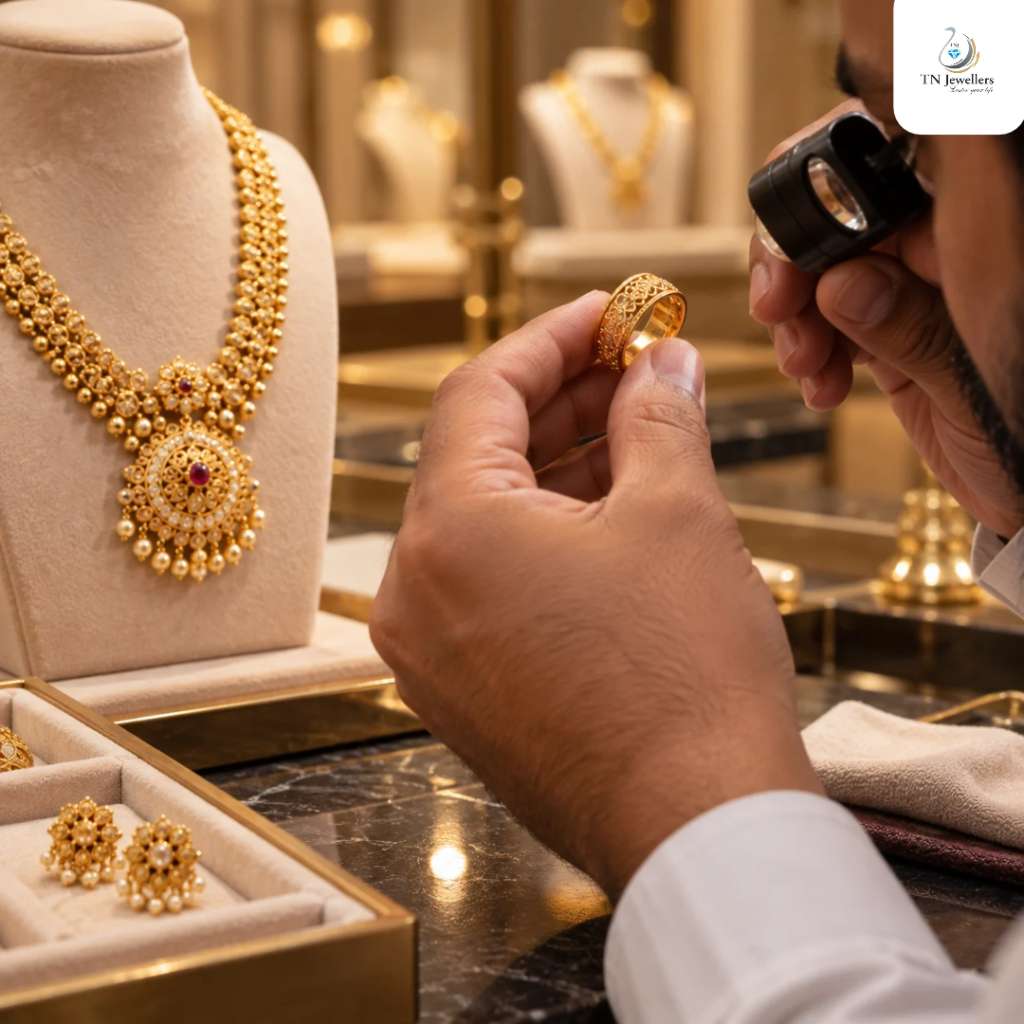
Hallmarking is an important factor to consider when purchasing gold jewellery. A hallmark provides information about the purity of the precious metal and helps buyers identify the quality standard of the jewellery.
In India, buyers should look for the applicable hallmark and purity identification on the jewellery. It is also important to purchase from a trusted jeweller and carefully check the details provided with the product.
Do not hesitate to ask the jeweller to explain the hallmark or purity marking if you are unsure about what it means.
3. Understand the Gold Rate
Gold prices can change regularly, so the gold rate used for calculating your jewellery price is another important factor.
Before buying, ask the jeweller:
- What is today’s gold rate?
- Is the rate based on 22K, 18K, or another purity?
- What rate is being applied to the jewellery?
- Is the rate calculated based on the net gold weight?
Understanding these details can make the final bill easier to evaluate.
It is also useful to compare the gold rate and pricing structure of different jewellers rather than focusing only on the final selling price.
4. Check the Net Gold Weight
Jewellery weight does not always represent the exact amount of gold used in the piece.
A jewellery item may contain gemstones, diamonds, beads, enamel, or other decorative materials. Therefore, it is useful to understand the difference between the gross weight and net gold weight.
Gross weight generally refers to the total weight of the jewellery piece, including stones and other materials.
Net gold weight refers to the weight of the gold component after accounting for non-gold materials.
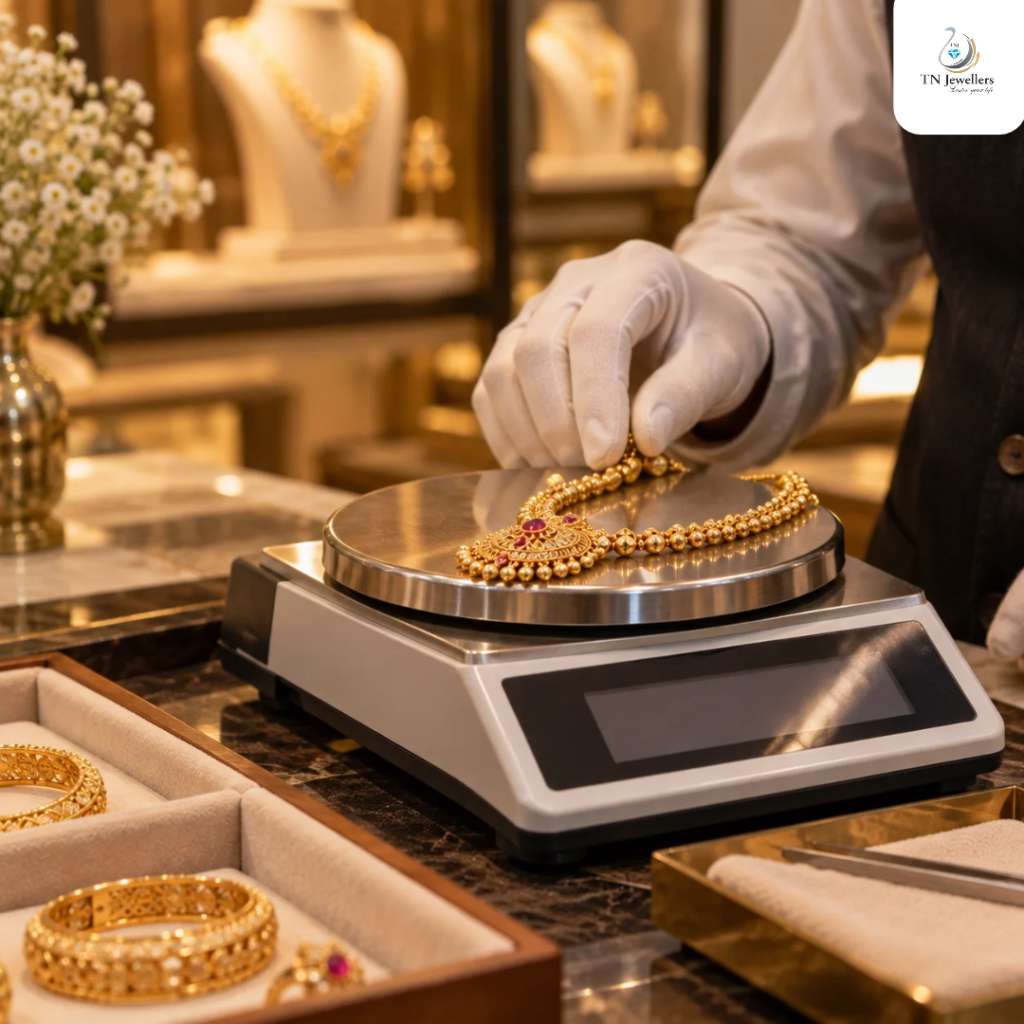
Ask the jeweller to clearly explain the gross weight, stone weight where applicable, and net gold weight. This helps you understand how the gold value has been calculated.
5. Understand Making Charges
Making charges are another major component of the final jewellery price.
These charges cover the craftsmanship, labour, design, manufacturing, and finishing involved in creating the jewellery. Making charges can vary depending on the design and manufacturing process.
A simple gold chain may have a different making charge from an intricate necklace featuring detailed craftsmanship.
Before finalizing your purchase, ask whether the making charge is calculated as:
- A percentage of the gold value
- A fixed amount per gram
- A fixed amount for the complete jewellery piece
Understanding the calculation can help you compare different designs and offers more effectively.
6. Ask About Wastage Charges
Some jewellery pricing structures may include wastage or other manufacturing-related charges. The exact calculation can vary between jewellers and jewellery designs.
If wastage is included in your quotation, ask the jeweller to explain:
- The wastage percentage or amount
- How it is calculated
- Whether it is included in the making charges
- Whether it is separately mentioned on the invoice
Never hesitate to ask for a complete price breakup before making the payment.
7. Examine the Design and Craftsmanship
Gold jewellery should not only look attractive but should also be comfortable and well-made.
Before buying, carefully inspect:
- Clasp quality
- Chain links
- Earring backs
- Bangle joints
- Ring edges
- Stone settings
- Overall finishing
- Symmetry and detailing
Run your eyes over the entire piece and check whether there are rough edges, loose components, or visible manufacturing issues.
For jewellery that you plan to wear frequently, durability should be considered alongside appearance.
8. Check Gemstones Separately
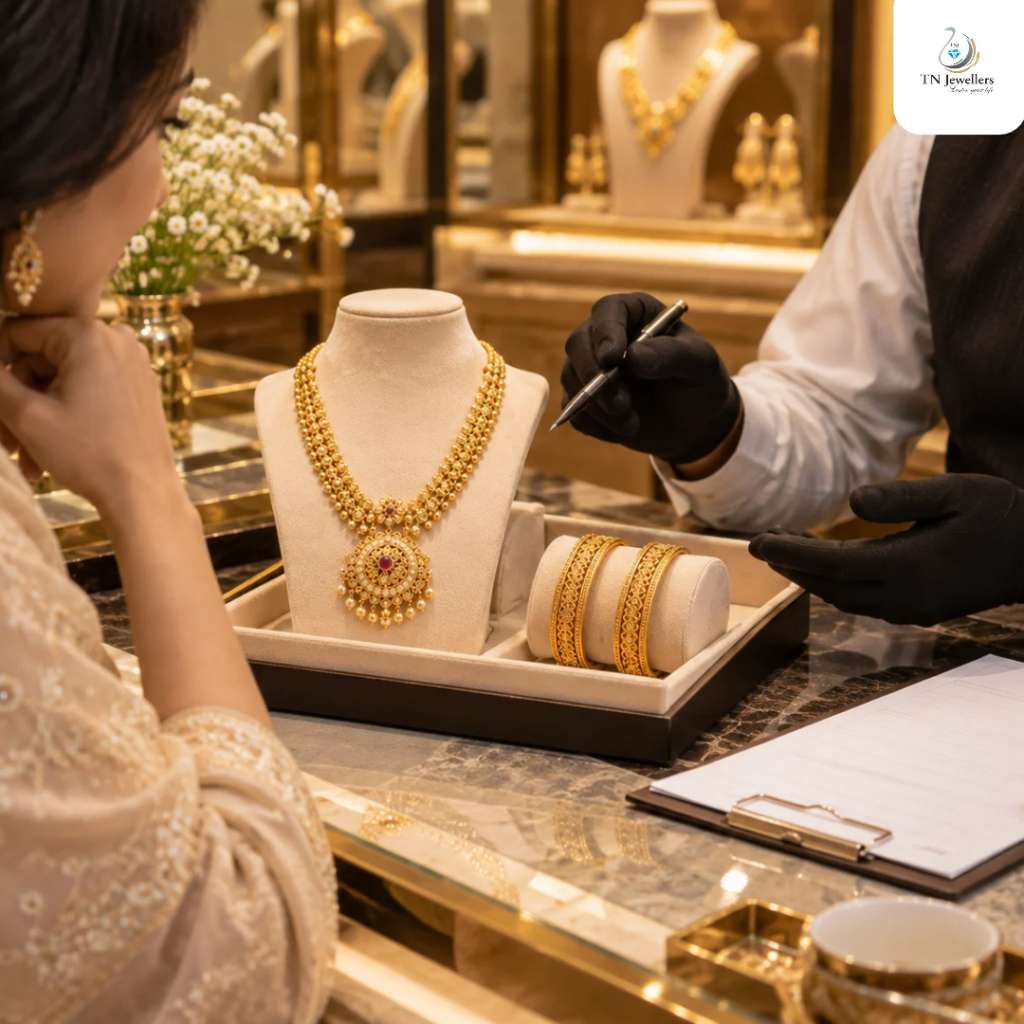
If the jewellery includes diamonds or other gemstones, ask for separate information about them.
The value of a gemstone can depend on several characteristics. For diamonds, factors such as cut, colour, clarity, and carat weight are commonly considered.
For other gemstones, factors such as type, quality, treatment, colour, origin, and certification may be relevant.
Ask whether the stones are natural, treated, synthetic, or lab-grown where applicable, and request appropriate documentation when purchasing high-value gemstone jewellery.
9. Read the Price Breakup Carefully
A jewellery bill should not be treated as just a final number. Understanding how the final amount has been calculated is important.
A typical jewellery purchase may include components such as:
- Gold value
- Stone value
- Making charges
- Wastage or other applicable charges
- Taxes
- Discounts, if applicable
Ask the jeweller to explain anything that you do not understand.
A transparent bill makes it easier to know exactly what you are purchasing and what you are paying for.
10. Check the Return and Exchange Policy
Jewellery is a significant purchase, so it is useful to understand the store’s return, exchange, and buyback policies before completing the transaction.
Policies can differ from one jeweller to another. Ask about:
- Exchange eligibility
- Return period
- Deduction during exchange
- Buyback terms
- Whether making charges are refundable
- Conditions applicable to damaged or customized jewellery
Do not rely only on verbal promises. Ask for the applicable policy in written form or check the terms provided by the jeweller.
11. Ask About Buyback and Exchange Value
If you may want to exchange or sell the jewellery in the future, understand the jeweller’s policy beforehand.
The amount you receive during a future exchange or buyback may depend on factors such as gold purity, current gold rate, deductions, stone value, and the specific terms of the jeweller.
Remember that the price you pay for jewellery can include craftsmanship and other charges that may not be recovered in the same way during resale.
Knowing these conditions before buying can help you set realistic expectations.
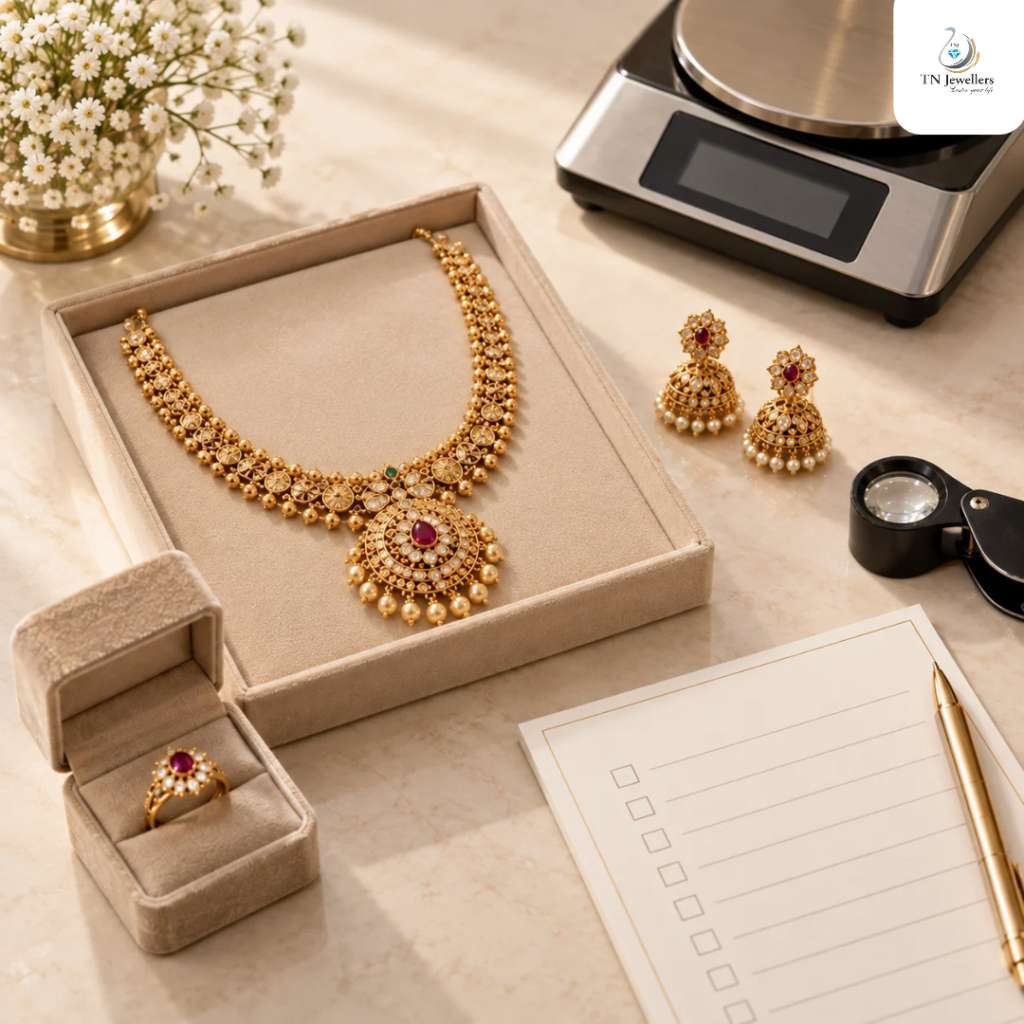
12. Choose the Right Purity for Your Lifestyle
The best gold purity for you depends partly on how and where you plan to wear the jewellery.
For example, jewellery worn regularly may need a balance between gold purity, strength, and design. Pieces intended mainly for special occasions may have different requirements.
Think about:
- How frequently you will wear it
- Whether you work with your hands
- Whether the jewellery will be exposed to water or chemicals
- Whether you want gemstone detailing
- Whether durability is a priority
- Whether the piece is for everyday use or occasional wear
Choosing jewellery according to your lifestyle can make the purchase more practical.
13. Buy From a Trusted Jeweller
The reputation of the jeweller is an important part of the buying process.
Look for a jewellery store that provides transparent pricing, proper documentation, clear product information, and reliable customer service.
Before purchasing, you can check:
- Customer reviews
- Store reputation
- Hallmarking practices
- Billing transparency
- Exchange and buyback policies
- After-sales services
- Jewellery certification where applicable
A trustworthy buying experience should make you comfortable asking questions about every part of the purchase.
14. Don’t Choose Jewellery Only by Making Charges
Low making charges may look attractive, but they should not be the only factor used to compare jewellery.
A design with lower making charges may differ in craftsmanship, weight, finishing, purity, or other pricing components.
Instead of focusing on one number, compare the complete price structure and understand what you are receiving for the amount you are paying.
The goal should be to find a jewellery piece that offers the combination of design, quality, purity, craftsmanship, and pricing that suits your requirements.
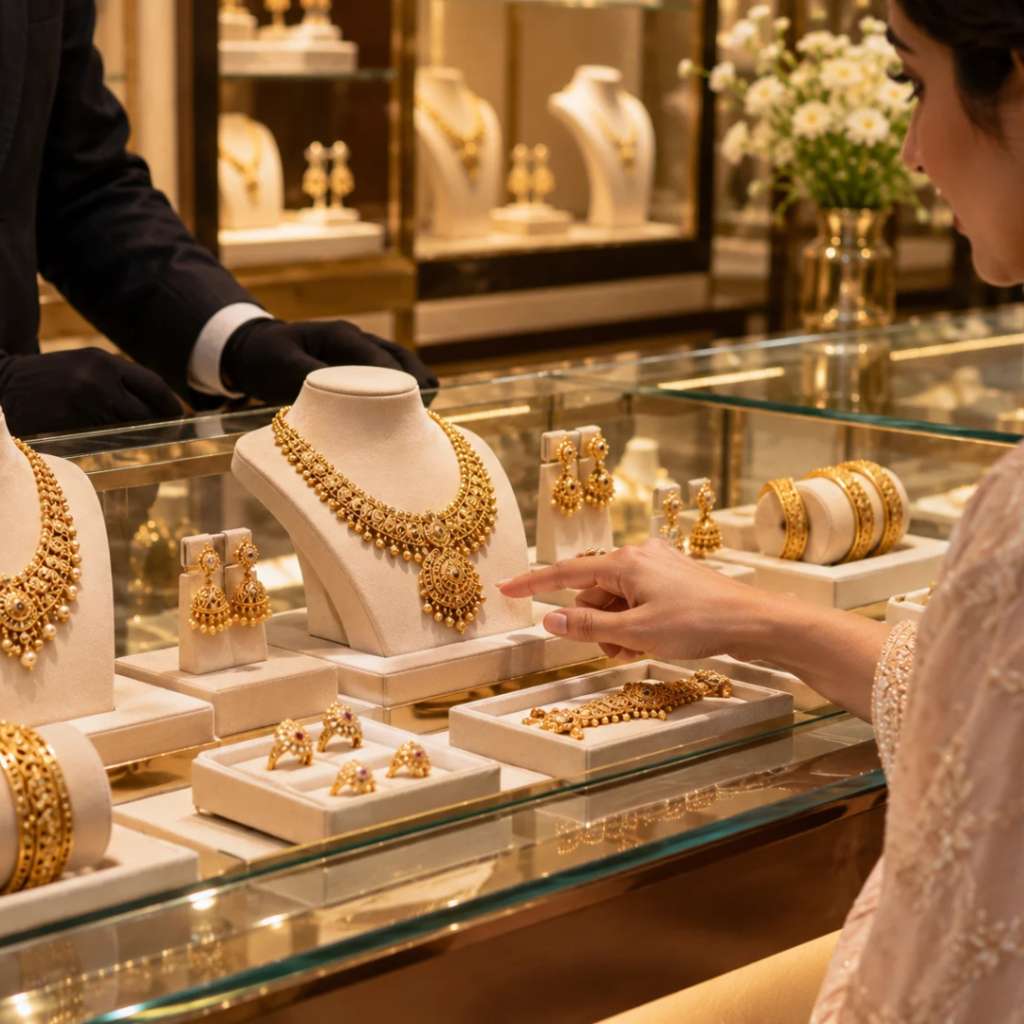
Connect with Us For OurExclusive Collection
15. Get a Proper Invoice
Always collect a detailed invoice when buying gold jewellery.
The invoice should provide relevant information about your purchase, including details such as jewellery description, purity, weight, pricing, applicable charges, and taxes.
Keep the invoice and any certificates or supporting documents in a safe place. These documents can be useful later for exchange, insurance, valuation, or other purposes.
Gold Jewellery Buying Checklist
Before making your final purchase, quickly review this checklist:
- Check the gold purity.
- Look for the applicable hallmark.
- Confirm the current gold rate being used.
- Check gross and net gold weight.
- Understand making charges.
- Ask about wastage or other manufacturing charges.
- Check gemstone details separately.
- Inspect the craftsmanship and finishing.
- Read the complete price breakup.
- Understand return and exchange policies.
- Ask about buyback terms.
- Purchase from a trusted jeweller.
- Collect and safely store the detailed invoice.
Taking a few extra minutes to check these points can make the buying process much clearer.
Conclusion
Buying gold jewellery is a decision that deserves careful consideration. A beautiful design may attract your attention, but factors such as gold purity, hallmarking, weight, making charges, gemstone details, pricing, and after-sales policies are equally important.
Before making a purchase, take time to understand exactly what you are buying and how the final price has been calculated. Ask questions about anything that is unclear, compare complete price breakups, inspect the craftsmanship, and make sure you receive proper documentation.
Whether you are buying gold jewellery for everyday wear, a wedding, a festival, a family celebration, or a special gift, an informed approach can help you choose a piece that matches your preferences and budget.
Gold jewellery carries both financial and emotional value. By checking the important details before you buy, you can enjoy your jewellery with greater confidence while making a thoughtful and well-informed purchase.
Check the gold purity, applicable hallmark, current gold rate, net gold weight, making charges, gemstone details, price breakup, and the jeweller’s exchange or buyback policy.
Check the purity marking and applicable hallmark on the jewellery. You can also ask the jeweller to explain the purity information and provide the relevant details on the invoice.
Making charges cover the craftsmanship, labour, manufacturing, design, and finishing involved in creating a jewellery piece. They may be calculated as a percentage, per gram, or as a fixed amount.
Net gold weight helps you understand how much of the jewellery’s total weight is actually gold, especially when the piece contains gemstones, diamonds, beads, enamel, or other materials.
Yes. Compare the complete price breakup, including gold rate, purity, net weight, making charges, stone value, applicable charges, and taxes rather than comparing only the final price.