
Gold and silver jewellery is not merely an accessory—it reflects elegance, tradition, and timeless beauty. A beautiful necklace, elegant pair of earrings, classic bangles, or a meaningful ring can hold sentimental value and become a part of important memories. However, regular use can gradually make jewellery look dull. Dust, sweat, body oils, cosmetics, moisture, and everyday exposure to different substances can affect its shine and appearance.
The good news is that you do not always need professional cleaning to keep your jewellery looking beautiful. With the right techniques and a little care, you can clean and maintain many types of gold and silver jewellery safely at home.
However, it is important to remember that gold and silver jewellery should not always be treated in exactly the same way. The purity of the metal, jewellery finish, gemstones, plating, and overall design can affect the appropriate cleaning method.
In this guide, we will explain simple ways to clean gold and silver jewellery at home, common mistakes to avoid, and practical maintenance tips that can help your favourite pieces retain their shine for longer.
What Causes Gold and Silver Jewellery to Become Dull Over Time?
Before learning how to clean jewellery, it is useful to understand why it becomes dull in the first place.
Gold is naturally resistant to corrosion, but pure gold is relatively soft. Jewellery is commonly crafted from gold blended with other metals to improve its strength and durability. These additional metals can react with moisture, sweat, chemicals, and environmental factors.
Silver is more likely to develop a dark or blackish layer over time. This is commonly known as tarnish. Silver can develop a tarnished appearance when it reacts with environmental elements, especially compounds that contain sulfur.
Some everyday factors that can affect jewellery include:
- Sweat and body oils
- Dust and dirt
- Perfume and deodorant
- Makeup and skincare products
- Hair sprays and styling products
- Household cleaning chemicals
- Chlorinated water
- Humidity and moisture
- Improper storage
- Frequent rubbing against other jewellery
Regular but gentle cleaning can help remove surface buildup and keep jewellery looking fresh.
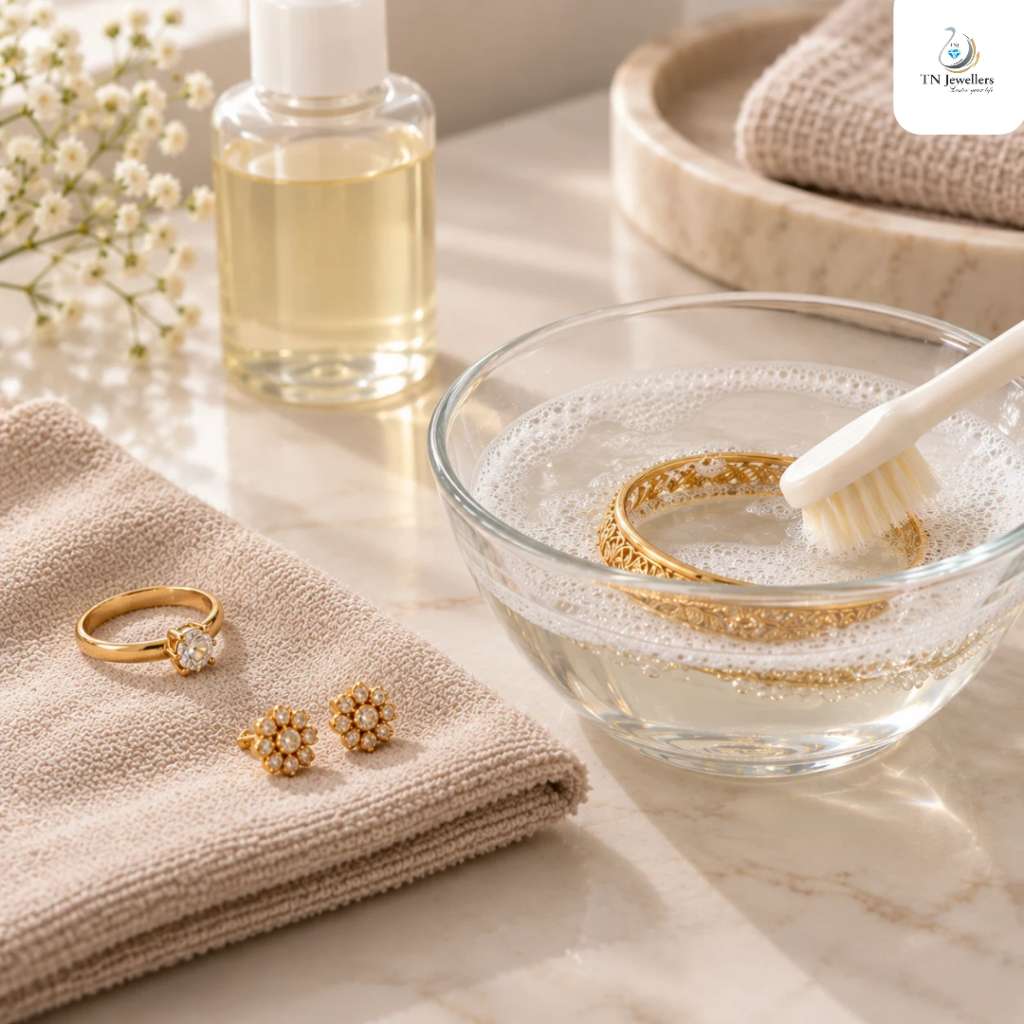
How to Clean Gold Jewellery at Home
Gold jewellery generally requires gentle handling. Avoid aggressive scrubbing because it can cause tiny scratches, especially on polished surfaces.
1. Prepare a Mild Cleaning Solution
Pour lukewarm water into a small bowl and mix in a few drops of gentle liquid soap. Mix it gently.
Steer clear of extremely hot water, as rapid temperature changes can affect delicate jewellery, especially pieces with gemstones or intricate settings.
2. Soak the Jewellery Briefly
Soak the plain gold jewellery in the cleaning solution for approximately 10–15 minutes. This helps loosen dirt, oils, and other surface residue.
If the jewellery contains delicate stones, pearls, glued elements, or intricate settings, avoid soaking it unless you know that the materials are suitable for this method.
3. Use a Soft Brush
Gently brush the jewellery’s surface using a soft-bristled toothbrush or a specially designed jewellery cleaning brush.
Pay particular attention to:
- The back of earrings
- Small grooves
- Chain links
- Underneath gemstone settings
- Engraved areas
Use light pressure instead of vigorous brushing.
4. Rinse Carefully
Rinse the jewellery thoroughly with clean water to wash away any remaining soap residue.
When cleaning small pieces, place a bowl or stopper over the sink drain. Accidentally dropping a ring or earring into the drain can turn a simple cleaning routine into an expensive problem.
5. Dry Completely
Place the jewellery on a soft, lint-free cloth and gently pat it dry to remove excess moisture. Allow it to air-dry completely before storing it.
Avoid putting jewellery away while it is still damp.
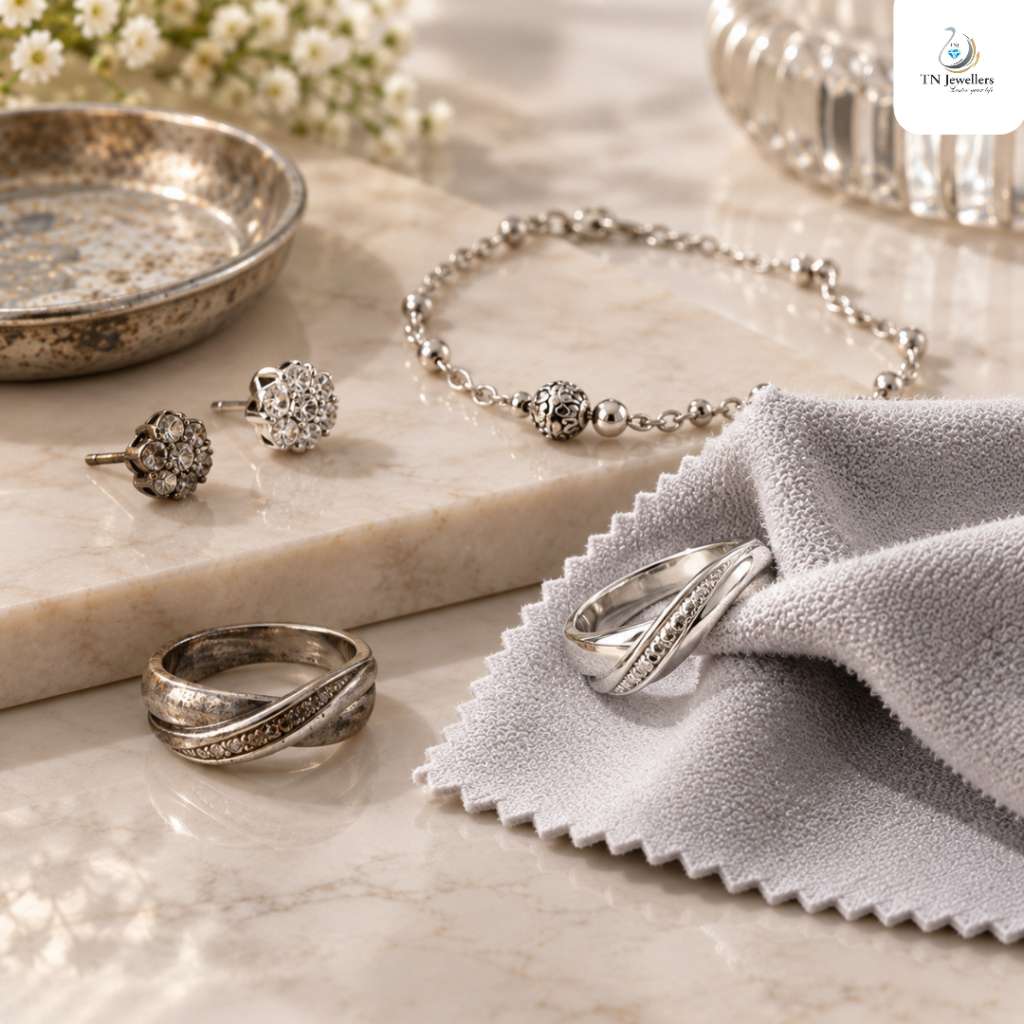
How to Clean Silver Jewellery at Home
Silver jewellery can develop tarnish more quickly than gold, but gentle regular cleaning can help restore its appearance.
1. Start With a Soft Polishing Cloth
For lightly tarnished silver jewellery, a dedicated silver polishing cloth is often a convenient option.
Gently rub the surface using small movements. Do not apply excessive pressure.
2. Use Mild Soap and Water
For silver jewellery covered with dirt or surface buildup, mix lukewarm water with a little mild soap.
Moisten a soft cloth with the solution and gently wipe the jewellery to clean away the residue.
You can use a very soft brush for detailed designs, but avoid aggressive scrubbing.
3. Rinse and Dry Thoroughly
After cleaning, carefully wash the jewellery with clean water and immediately dry it using a soft, lint-free cloth.
Silver should not be left wet because prolonged moisture can contribute to tarnishing.
What About Baking Soda for Silver?
Baking soda is frequently recommended as a homemade silver-cleaning solution. However, abrasive cleaning methods can potentially scratch jewellery surfaces or affect special finishes.
For valuable, antique, highly polished, oxidized, plated, or intricately designed silver jewellery, a jewellery-specific polishing cloth or professional cleaning may be a safer choice.
How to Clean Gold-Plated Jewellery
Gold-plated jewellery requires more care than solid gold because the gold layer on the surface is relatively thin.
Avoid harsh chemicals, abrasive materials, and aggressive polishing.
Instead:
- Use a soft, dry or slightly damp cloth.
- Wipe gently to remove surface dirt.
- Avoid prolonged soaking.
- Dry the jewellery immediately.
- Store it separately in a soft pouch.
Frequent exposure to water, sweat, perfumes, and chemicals can gradually affect the plating.
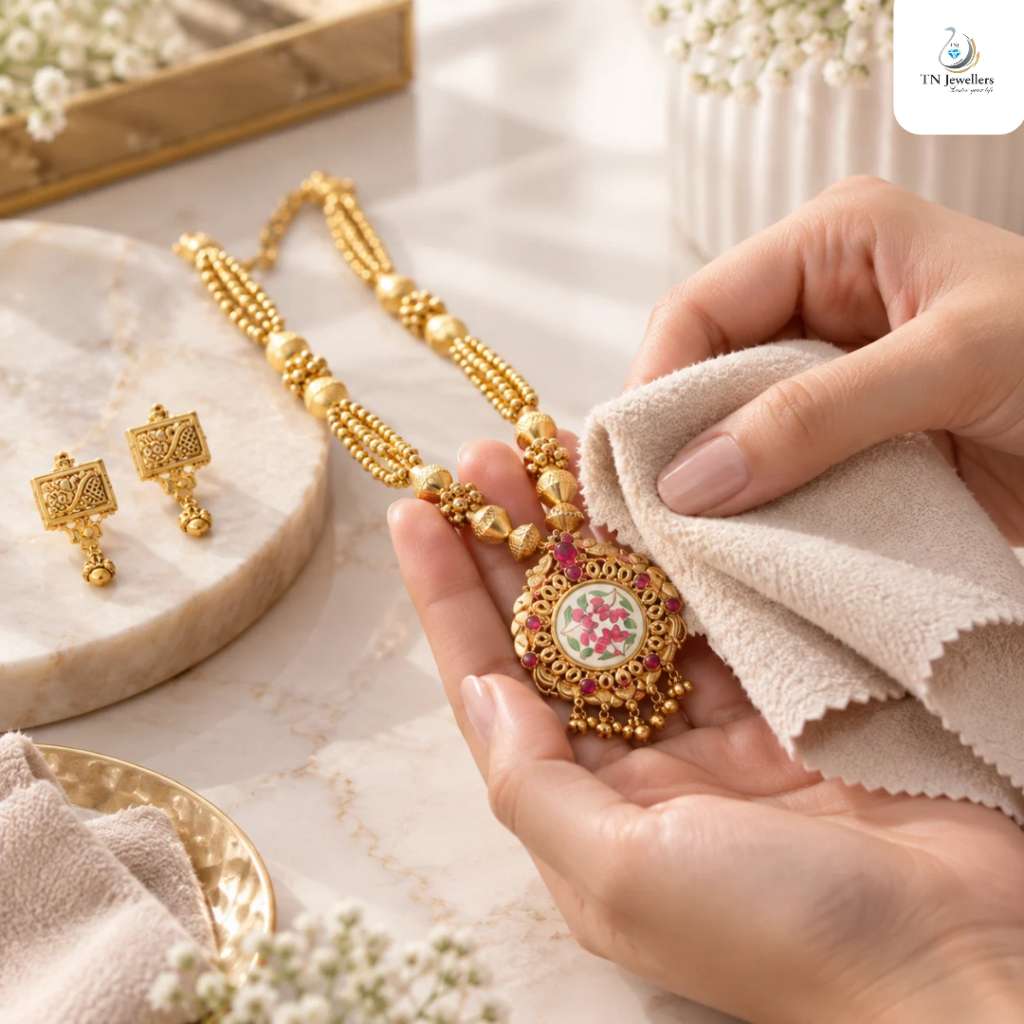
Connect with Us For OurExclusive Collection
How to Clean Jewellery With Gemstones
Jewellery containing diamonds, gemstones, or other decorative elements needs additional care.
Different gemstones can have different levels of hardness and sensitivity. Some stones may also be treated or mounted using materials that do not respond well to soaking or chemicals.
For valuable gemstone jewellery:
- Use a soft cloth for routine cleaning.
- Avoid unknown chemical cleaners.
- Do not use abrasive powders.
- Check whether the gemstone is suitable for water-based cleaning.
- Inspect the setting regularly.
- Get valuable pieces professionally cleaned when necessary.
If a stone appears loose, avoid cleaning it aggressively. Have the setting checked by a professional jeweller.
Jewellery Cleaning Methods to Avoid
Trying to make jewellery shine quickly can sometimes cause more harm than good. Several common household methods may be unsuitable for delicate jewellery.
Avoid Toothpaste
Toothpaste may contain mild abrasives designed for teeth, not precious metals. Scrubbing jewellery with toothpaste can leave fine scratches on some surfaces.
Avoid Bleach and Harsh Chemicals
Bleach and strong household chemicals can damage certain metals, finishes, and jewellery components.
Avoid Rough Brushes
Hard-bristled brushes can scratch polished surfaces and may loosen delicate settings.
Avoid Excessive Polishing
Constant polishing can gradually affect the surface finish of jewellery, particularly plated pieces.
Avoid Unverified DIY Mixtures
Internet cleaning hacks can be tempting, but a method that works for one type of jewellery may damage another. Always consider the metal, finish, gemstones, and construction before trying a new cleaning technique.
How to Maintain Gold Jewellery for Longer
Cleaning is only one part of jewellery care. Your everyday habits can make a major difference.
Remove Jewellery Before Showering
Soap, shampoo, conditioner, and body products can leave residue on jewellery. Water exposure can also increase the risk of tarnishing for some metals.
Removing jewellery before showering is a simple way to reduce unnecessary exposure.
Take Jewellery Off Before Swimming
Swimming pools often contain chlorine and other chemicals that can affect jewellery.
It is better to remove gold and silver jewellery before entering swimming pools or using hot tubs.
Apply Perfume Before Wearing Jewellery
Perfume, deodorant, hairspray, and cosmetics can contain ingredients that may affect jewellery surfaces.
A useful routine is to apply personal-care products first and put on your jewellery after they have dried.
Remove Jewellery During Exercise
Sweat, friction, and movement can expose jewellery to moisture and chemicals. Rings and bracelets can also collect dirt during workouts.
Removing jewellery before exercising can help keep it cleaner.
How to Store Gold and Silver Jewellery
Proper storage is just as important as cleaning.
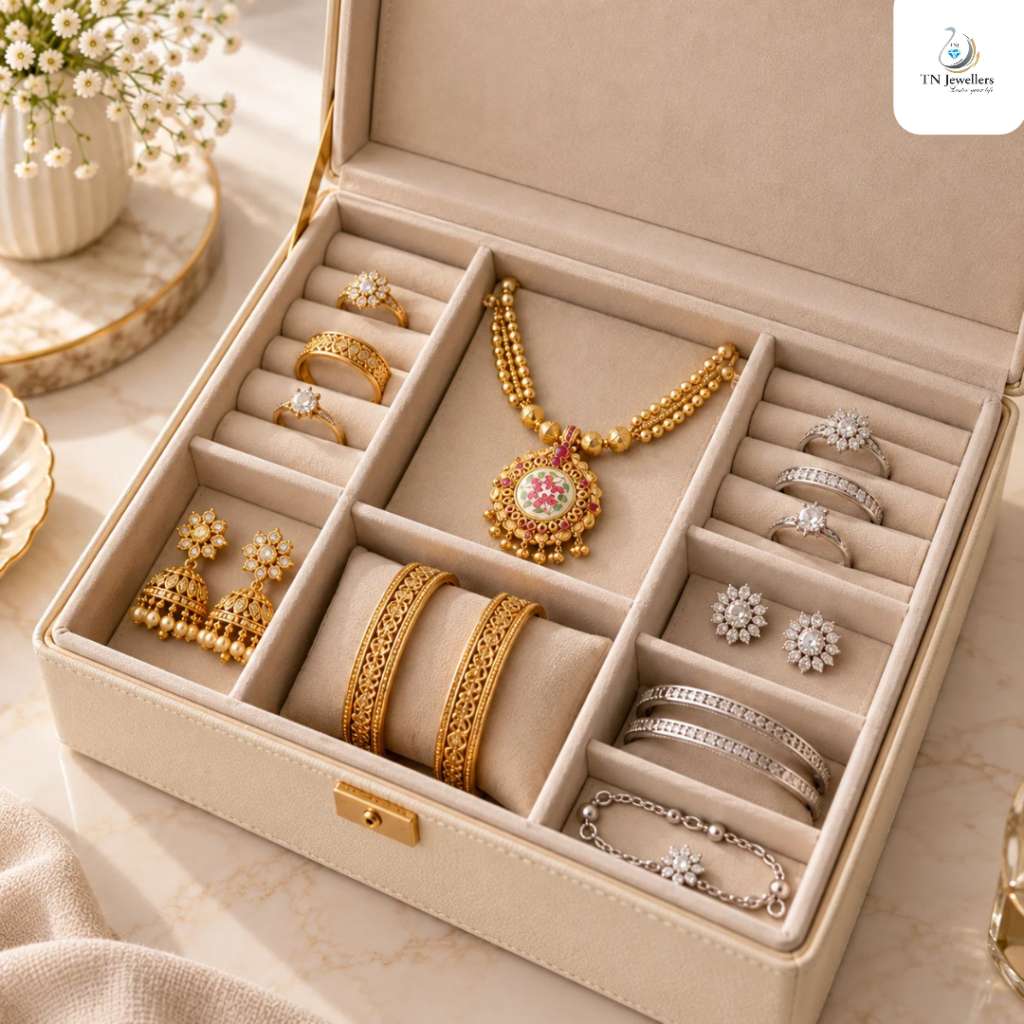
Store Pieces Separately
Different jewellery pieces can rub against each other and cause scratches.
Keep necklaces, rings, earrings, and bangles in separate compartments whenever possible.
Use Soft Pouches
Soft jewellery pouches can help protect individual pieces from scratches and dust.
For silver jewellery, airtight or anti-tarnish storage can also help reduce exposure to air and moisture.
Keep Jewellery Away From Humidity
Bathrooms may seem convenient for storing jewellery, but frequent humidity can contribute to tarnishing and deterioration.
A cool, dry storage area is generally a better choice.
Keep Chains Properly Organized
Necklaces and chains can easily become tangled. Store them separately or use jewellery organizers with individual hooks or compartments.
This reduces tangling and unnecessary pulling.
How Often Should You Clean Jewellery?
There is no single cleaning schedule that works for every piece.
Jewellery worn every day may need gentle cleaning more frequently than pieces worn occasionally.
A simple approach is:
- Everyday jewellery: Inspect and wipe regularly.
- Frequently worn gold jewellery: Gentle cleaning when dirt or residue becomes visible.
- Silver jewellery: Clean when tarnish begins to appear.
- Occasionally worn jewellery: Clean lightly before storing and inspect before wearing again.
- Valuable or delicate jewellery: Consider periodic professional inspection and cleaning.
The goal is not to clean jewellery as aggressively or as frequently as possible. The goal is to remove buildup while protecting the metal and design.
Signs Your Jewellery Needs Professional Cleaning
Home cleaning is useful for routine maintenance, but some jewellery should be handled by a professional.
Consider visiting a trusted jeweller if:
- A gemstone appears loose.
- A clasp is becoming weak.
- A chain has damaged links.
- Heavy tarnish does not improve with gentle cleaning.
- The jewellery has an antique or delicate finish.
- The piece contains valuable or sensitive gemstones.
- Gold plating appears worn.
- You notice scratches, dents, or structural damage.
- You are unsure which cleaning method is safe.
Professional cleaning can also provide an opportunity to inspect the jewellery for loose stones, damaged clasps, worn settings, or other problems.
Simple Daily Habits to Protect Your Jewellery
Small changes in your routine can significantly reduce the need for frequent cleaning.
Remember these simple habits:
Wear jewellery after applying cosmetics: Give creams, perfumes, and sprays time to settle before putting on jewellery.
Remove jewellery before water activities: Take off jewellery before swimming, bathing, or using a hot tub.
Wipe jewellery after wearing: A soft cloth can remove sweat and surface oils.
Store pieces separately: This reduces scratches and tangling.
Keep silver dry: Moisture can accelerate tarnishing.
Handle delicate jewellery carefully: Avoid pulling chains or pressing directly against gemstone settings.
Inspect jewellery regularly: Check clasps, stones, hooks, and links before wearing.
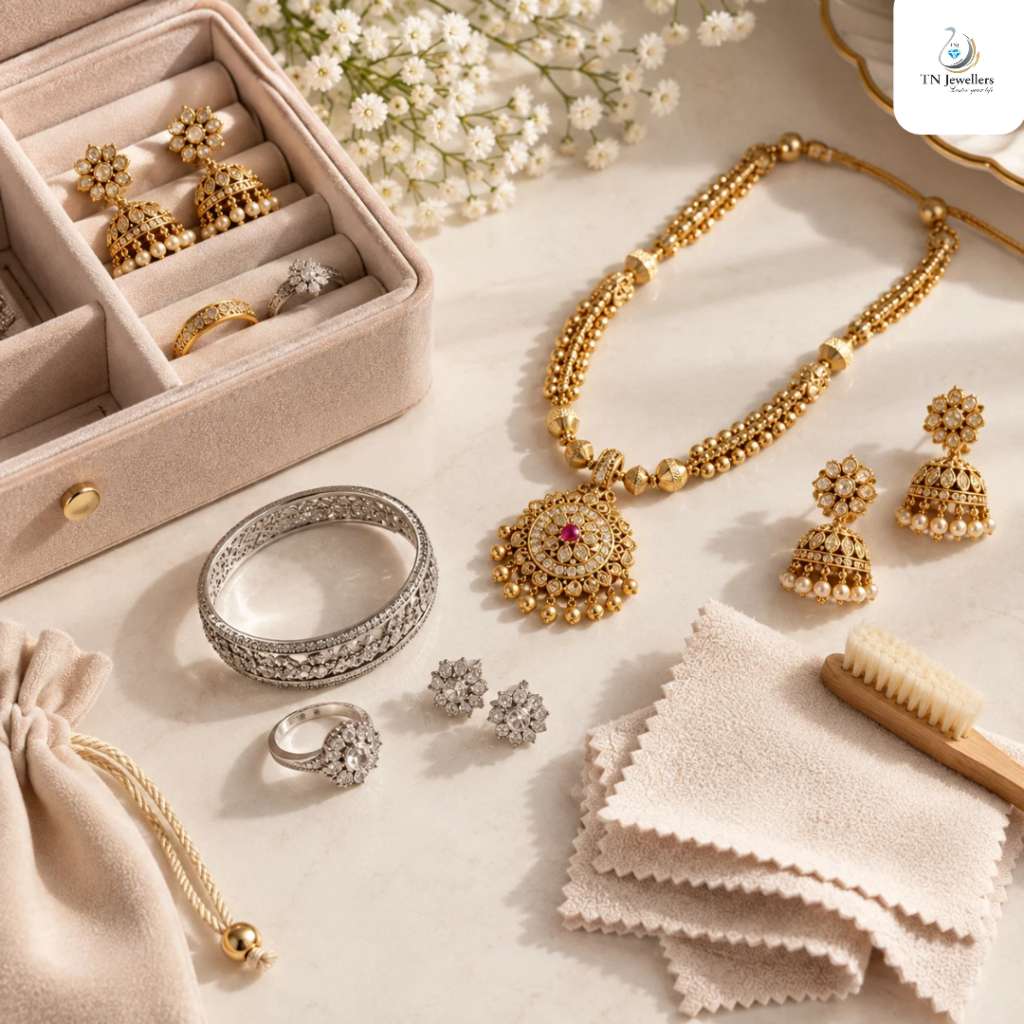
Gold vs Silver Jewellery Care: What Is Different?
Although both gold and silver benefit from gentle cleaning, their maintenance needs are somewhat different.
Gold jewellery generally focuses on removing dirt, oils, and product residue while protecting its polished surface.
Silver jewellery requires additional attention to tarnishing because silver can darken over time due to reactions with its environment.
This means silver may benefit from appropriate polishing and careful storage, while gold often requires simple washing, gentle brushing, rinsing, and drying.
However, jewellery construction matters just as much as the metal itself. Gold-plated jewellery, gemstone jewellery, antique jewellery, and pieces with special finishes may require completely different care.
Conclusion
Gold and silver jewellery can retain its beauty for years when it receives the right care. Regular gentle cleaning, proper storage, and a few simple everyday precautions can help reduce dirt, residue, tarnish, and unnecessary wear.
For gold jewellery, mild soap, lukewarm water, gentle brushing, careful rinsing, and thorough drying can work well for many simple pieces. Silver jewellery may need additional attention because it naturally develops tarnish over time. A suitable silver polishing cloth and proper storage can help maintain its appearance.
Most importantly, avoid harsh chemicals, abrasive materials, excessive scrubbing, and unverified cleaning hacks. If your jewellery contains valuable gemstones, intricate detailing, delicate settings, or special finishes, professional advice is often the safest option.
With consistent care and careful handling, your favourite gold and silver jewellery can continue to look elegant and beautiful while preserving the memories attached to every piece.
Yes, mild soap and lukewarm water can be suitable for cleaning many plain gold jewellery pieces. However, delicate gemstones and intricate designs may require special care.
Store silver jewellery in a dry place, preferably in a soft jewellery pouch or suitable anti-tarnish storage. Also, reduce exposure to moisture, perfumes, cosmetics, and household chemicals.
A very soft-bristled toothbrush can be used for certain plain jewellery pieces. Always use gentle pressure and avoid brushing delicate finishes or sensitive jewellery.
Yes. Cleaning away sweat, oils, and residue before storage can help reduce buildup and keep jewellery cleaner while it is stored.
Professional cleaning or inspection may be appropriate if your jewellery has loose stones, damaged clasps, broken links, heavy tarnish, worn plating, or a delicate design.