Buying gold jewellery is an important decision. Whether you are purchasing a wedding necklace, gold chain, ring, earrings, bangles, or a traditional jewellery set, understanding gold purity can help you make a confident and informed choice. Gold jewellery is available in different purity levels, and the purity of the metal can affect its value, appearance, durability, and price.
Before buying gold jewellery, it is important to understand how its purity is determined, what a hallmark signifies, and which essential information should be verified on both the jewellery and the purchase bill. At TN Jewellers Bikaner, customers can explore a wide range of gold jewellery while paying attention to important quality and purity details.
What Does Gold Purity Mean?
Gold purity shows the percentage of pure gold contained in a jewellery piece compared with other metals.Pure gold is naturally soft, so jewellery is generally made by combining gold with other metals. These additional metals improve strength and make the jewellery more suitable for everyday use.
Gold purity is commonly represented in karats (K). Jewellery with a higher karat rating contains a larger percentage of pure gold within its overall composition.
For example:
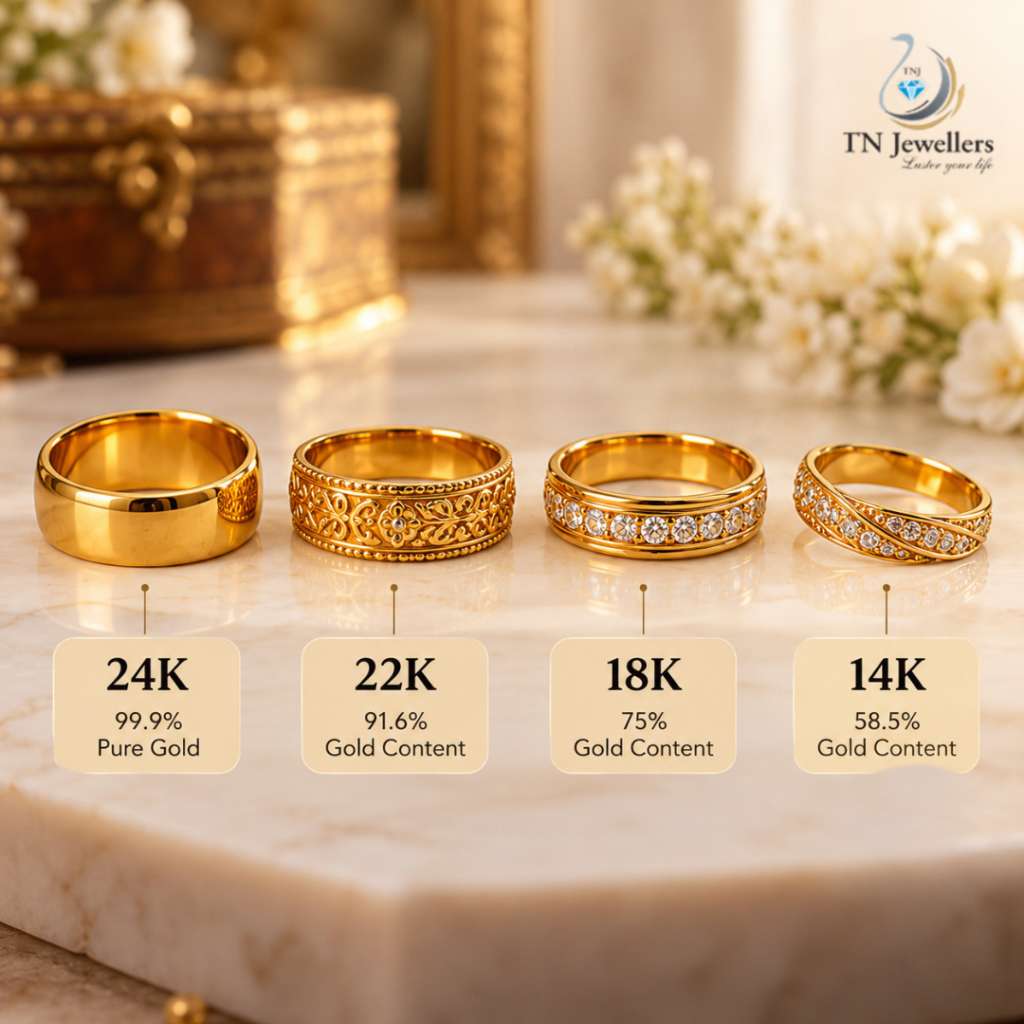
- 24K gold is considered nearly pure gold.
- 22K gold has a high gold content, making it a popular choice for traditional Indian jewellery.
- 18K gold has a lower gold content and more alloy metals, making it ideal for modern jewellery designs.
- 14K gold contains an even greater proportion of other metals and is often selected for durable jewellery.
When purchasing jewellery, do not judge purity only by the colour or shine of the piece. Proper identification and documentation are much more important.
Why Should You Check Gold Purity Before Buying?
Gold jewellery can represent a significant investment, especially when purchasing bridal jewellery or larger gold sets. Verifying gold purity helps you know exactly what level of gold content you are paying for.
Purity verification can help you:
Understand the value: The amount of pure gold contributes significantly to the intrinsic value of the jewellery.
Compare jewellery properly: Two pieces may look similar but have different purity levels.
Make an informed purchase: Knowing the karat or fineness helps you select jewellery according to your budget and requirements.
Keep your records: A complete invoice contains important details about the jewellery item and your purchase.
Buy with greater confidence: Proper hallmark and purity information gives buyers an additional level of assurance.
Understand Karat and Fineness
One of the easiest ways to understand gold purity is to learn the difference between karat and fineness.
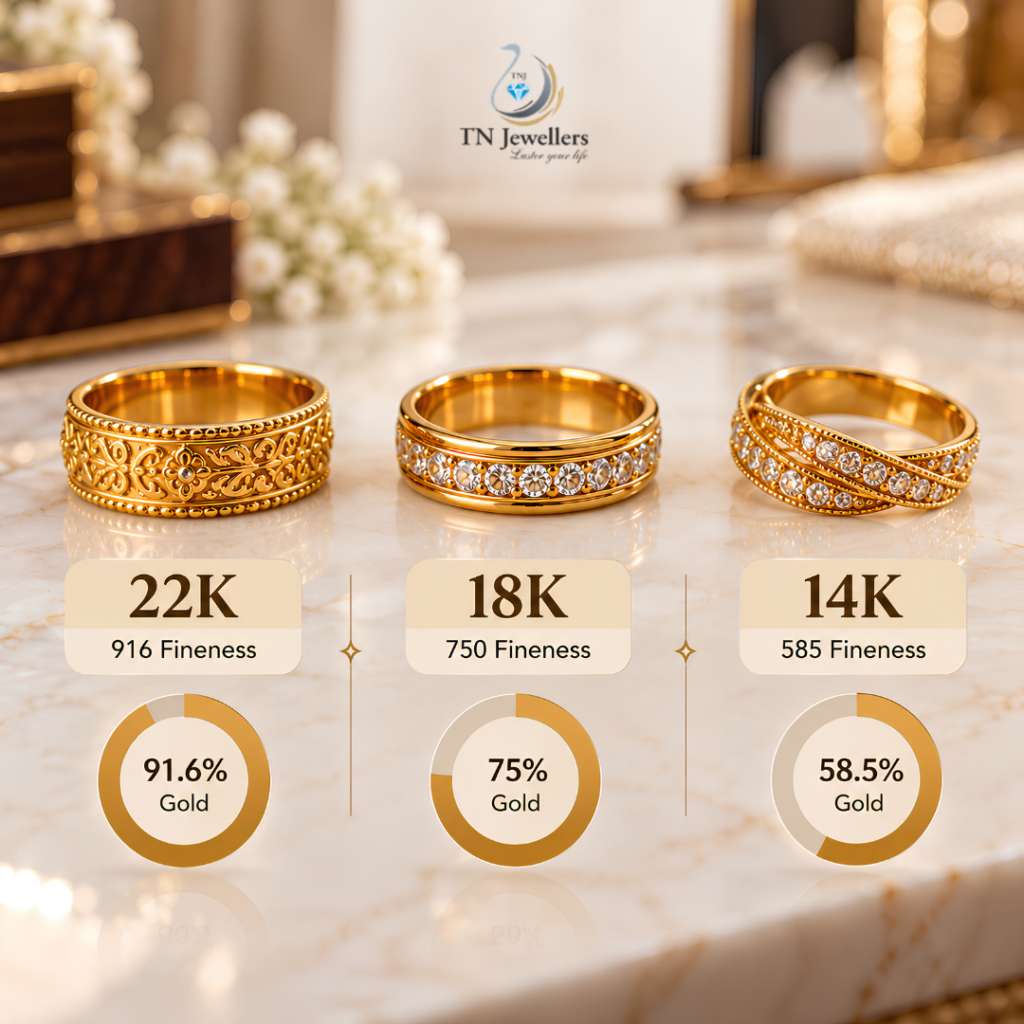
Karat is a measure that shows how much pure gold is present within 24 equal parts of an alloy. Fineness expresses the gold content in parts per thousand.
For example, 22K gold is approximately 916 fineness, meaning it contains about 91.6% gold.Likewise, 18K gold generally carries a 750 fineness mark, whereas 14K gold is typically marked 585. These figures help indicate the gold purity level of a jewellery piece.
However, buyers should not rely on a number alone. It is important to check the official hallmark and other relevant markings on the jewellery.
Look for the BIS Hallmark
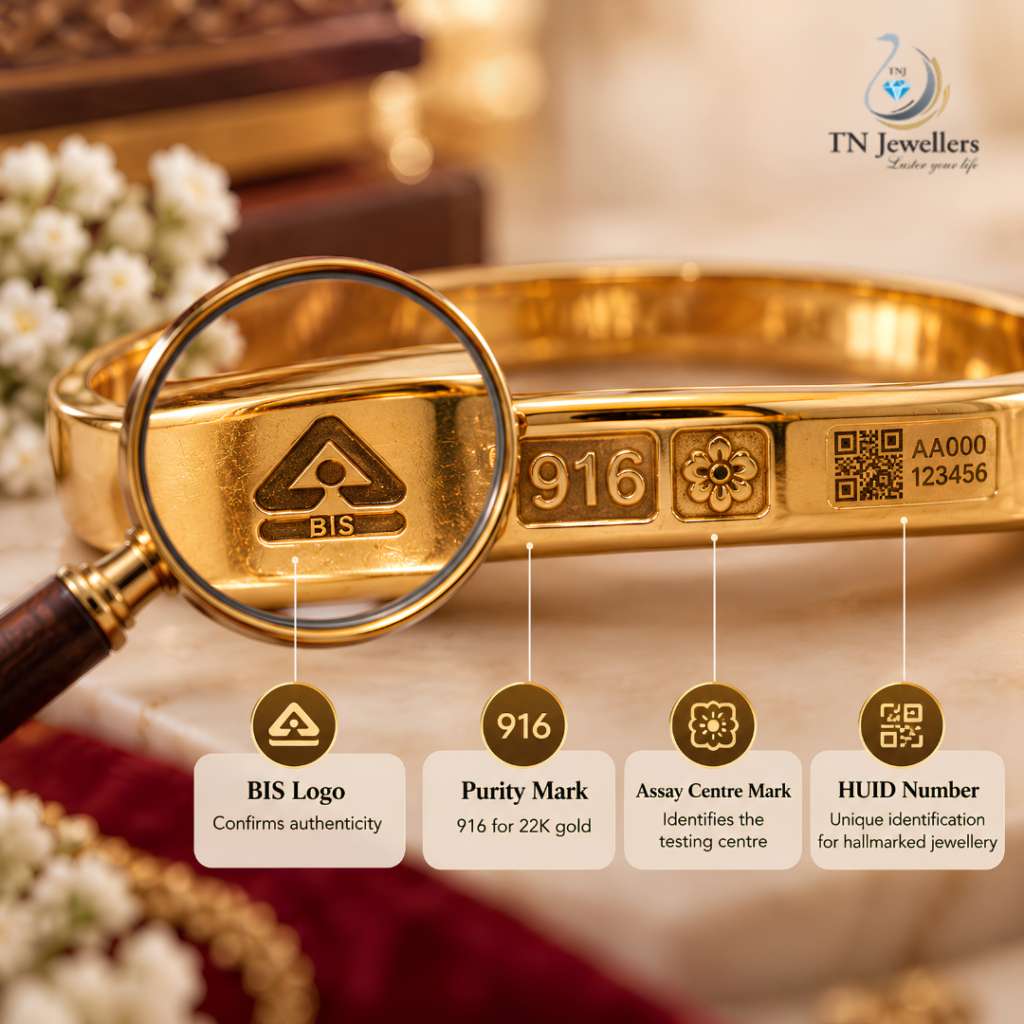
When purchasing gold jewellery in India, checking for a BIS hallmark is an important step. The Bureau of Indian Standards (BIS) manages the country’s hallmarking framework for precious metal articles. Hallmarking helps buyers verify and understand the declared purity of precious metal jewellery.
A hallmarked gold jewellery piece carries specific identification details. Buyers should carefully inspect the marking rather than simply accepting verbal claims about purity.
If you are purchasing jewellery for a wedding, festival, anniversary, investment, or personal collection, asking the jeweller about hallmarking is a sensible step.
Check the Purity Marking
Gold jewellery may carry a purity or fineness indication corresponding to its gold content. For instance, you may see markings associated with 22K, 18K, or other purity categories.
The 916 marking is a common purity indication for 22K gold jewellery, showing its gold content.
Before buying, take a moment to inspect the jewellery and understand the purity information provided by the seller. If you are unsure about any marking, ask the jeweller to explain what it means.
A trustworthy jewellery showroom should be able to provide clear information about the jewellery’s purity and relevant certification.
Check the HUID Details
Hallmarked jewellery in India also uses a Hallmark Unique Identification (HUID) system. The HUID is a unique identification number associated with a hallmarked article.
Buyers can use the relevant BIS verification facility to check hallmark-related information where applicable.
This adds another layer of transparency because the buyer is not required to depend solely on the appearance of the jewellery.
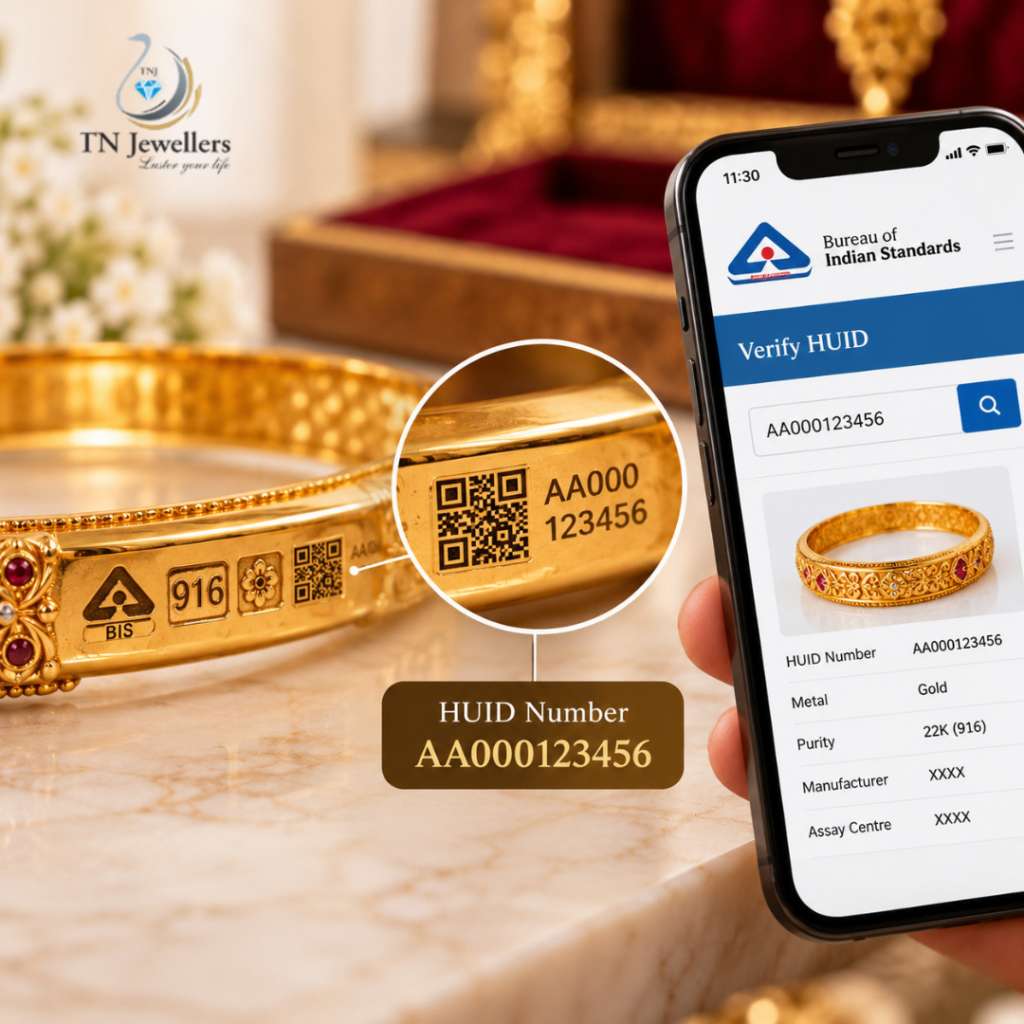
When buying gold jewellery, verifying the hallmark and HUID information is an essential step in making an informed purchase.
Examine the Jewellery Carefully
While visual inspection cannot confirm gold purity by itself, it is still useful when purchasing jewellery.
Carefully examine the jewellery’s overall finish to ensure the piece appears well-crafted, smooth, polished, and refined.Check whether the design, polish, stones, clasps, hooks, and other components are properly finished.
For earrings, examine the backs and fastenings. For bangles and bracelets, inspect the joints and locking mechanisms. For necklaces and chains, look at the links and clasp.
Remember that jewellery can contain components made from materials other than gold, such as gemstones, enamel, or other metals. Ask the jeweller how these components are included in the product’s weight and pricing.
Ask for a Detailed Bill
A detailed invoice is an important document that should always accompany your gold jewellery purchase for reference.
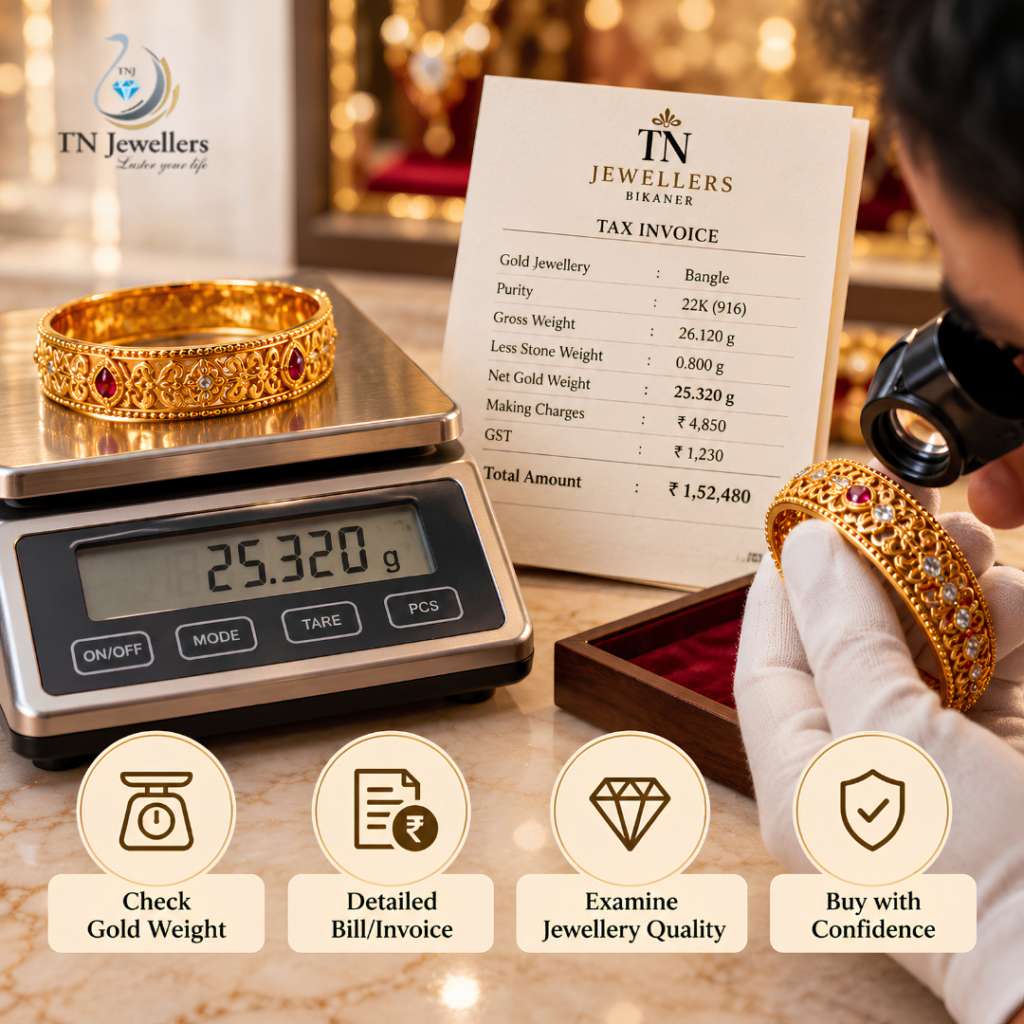
Before completing your purchase, ask for a detailed bill that clearly explains the transaction. Depending on the jewellery item, the invoice may include information such as:
- Gold purity
- Net gold weight
- Gross weight
- Stone or other material weight, where applicable
- Making charges
- Applicable taxes
- Final jewellery price
A detailed invoice makes it easier to understand how the final price has been calculated.
It can also be useful for future reference if you want to exchange, resell, insure, or evaluate the jewellery later.
Understand Net Weight and Gross Weight
Another important point is the difference between gross weight and net gold weight.
Gross weight generally refers to the total weight of the jewellery, including components such as stones or other materials.
Net gold weight refers to the weight of the gold portion after accounting for non-gold components, as applicable.
This distinction matters because the gold price should not simply be calculated on the total weight of a stone-studded jewellery piece.
Ask the jeweller to explain the weight calculation before you agree to the purchase.
Don’t Judge Purity by Colour
A common misconception is that darker or brighter yellow gold automatically means higher purity. This is not a reliable method.
Gold jewellery can have different colours depending on its composition and design. Yellow gold, white gold, and rose gold can contain different alloy combinations while still being legitimate gold jewellery.
Similarly, a highly polished jewellery piece may appear more luxurious without necessarily having a higher gold purity.
Therefore, always prioritize hallmarking, purity information, documentation, and transparent pricing over appearance alone.
Ask About Making Charges
The price of gold jewellery is not determined only by the gold rate.
Making charges can vary according to the complexity of the design, craftsmanship, finishing, manufacturing process, and type of jewellery.
For example, an intricately designed bridal necklace may require significantly more craftsmanship than a simple gold chain.
Before purchasing, ask the jeweller how the making charges have been calculated. Understanding this component allows you to compare products more effectively and avoid confusion about the final price.
Be Careful When Comparing Gold Jewellery Prices
If you are comparing gold jewellery between different jewellers, make sure you are comparing similar products.
Consider:
Purity: Are both pieces made from the same gold purity?
Net weight: Are you comparing the actual gold weight?
Making charges: Are the charges calculated in the same way?
Stones: Does one piece contain gemstones or other materials?
Taxes: Are the quoted prices inclusive or exclusive of applicable taxes?
A jewellery piece with a lower advertised price is not necessarily a better deal if its purity, weight, design, or charges differ.
What Should You Ask a Jeweller Before Buying?
Before purchasing gold jewellery, you can ask a few straightforward questions:
- What is the gold purity of this jewellery?
- Is the jewellery hallmarked?
- What is the HUID?
- What is the net gold weight?
- What is the gross weight?
- Are there gemstones or other non-gold components?
- How much are the making charges?
- What taxes are included in the final price?
- Will I receive a detailed invoice?
- What are the exchange or buyback terms?
Getting clear answers before payment can make your jewellery-buying experience much easier.
Gold Purity and Bridal Jewellery
For wedding jewellery, purity becomes particularly important because bridal purchases can involve multiple pieces and a substantial budget.
Brides may purchase necklaces, earrings, bangles, rings, maang tikka, bracelets, or complete jewellery sets. Since different pieces may have different designs and weights, checking the purity and billing details of each item is worthwhile.
At TN Jewellers Bikaner, buyers can explore jewellery options while discussing design preferences, gold purity, craftsmanship, and pricing with the jewellery team.
Whether you prefer traditional bridal jewellery or a contemporary design, understanding the basic principles of gold purity helps you make a more informed decision.
Choose Jewellery With Confidence at TN Jewellers Bikaner
Gold jewellery is more than an accessory. It can be a part of weddings, celebrations, family traditions, special milestones, and long-term personal collections. That makes choosing the right jewellery an important decision.
Before buying, take time to check the gold purity, BIS hallmark, HUID details, net weight, making charges, and detailed invoice. Do not make your decision based only on colour, shine, design, or advertised price.
For those searching for gold jewellery in Bikaner, TN Jewellers Bikaner provides an opportunity to explore designs, understand quality details, discuss craftsmanship, and choose jewellery according to individual preferences.
The next time you plan to buy gold jewellery, remember: check the purity, verify the hallmark, understand the weight, review the bill, and then make your choice with confidence.
Conclusion
Knowing how to check gold purity before buying jewellery can help you become a smarter jewellery buyer. Understanding karat and fineness, looking for proper hallmark information, checking HUID details, reviewing net gold weight, and asking for a transparent invoice are all valuable steps.
Whether you are buying a simple gold ring, an everyday chain, traditional bangles, diamond jewellery, or a complete bridal set, these checks can help you understand your purchase better.
Choose jewellery carefully, ask questions, compare the right details, and keep your purchase documentation safely. With the right knowledge and a transparent jewellery-buying process, your gold purchase can be both beautiful and reassuring.
You can check gold purity by looking for the BIS hallmark, purity or fineness marking, and HUID details. Always ask the jeweller for a detailed invoice mentioning gold purity and net weight.
916 gold means 22K gold, which contains approximately 91.6% pure gold. It is a popular choice for traditional Indian gold jewellery, including necklaces, bangles, earrings, and bridal sets.
22K gold contains approximately 91.6% pure gold, whereas 18K gold contains 75% pure gold. 22K is commonly used for traditional jewellery, while 18K is often preferred for modern jewellery designs.
HUID stands for Hallmark Unique Identification. It is a unique identification number associated with hallmarked gold jewellery that helps buyers verify hallmark-related details through the BIS verification facility.
You can visit TN Jewellers Bikaner to explore a wide range of gold jewellery, including necklaces, rings, earrings, bangles, and bridal jewellery. Ask the jewellery team about gold purity, BIS hallmark, HUID, and detailed billing before purchasing.