
Gold and silver jewellery can add elegance to almost any outfit, whether you are wearing a simple chain every day, traditional bangles for a festival, or a statement necklace for a wedding. However, even high-quality jewellery can gradually lose its shine when it is exposed to sweat, moisture, cosmetics, dust, chemicals, and improper storage.
Taking proper care of your jewellery can help preserve its appearance and keep your favourite pieces looking beautiful for longer. The good news is that jewellery care does not always require complicated methods. A few simple habits, combined with proper cleaning and storage, can make a significant difference.
At TN Jewellers Bikaner, jewellery lovers can explore a variety of gold and silver jewellery designs. Along with choosing the right jewellery, understanding how to maintain it is an important part of enjoying your collection for years to come.
Why Does Jewellery Lose Its Shine?
Gold and silver are durable metals, but jewellery is not completely resistant to everyday wear.
Over time, jewellery can come into contact with:
- Sweat and body oils
- Dust and dirt
- Perfume
- Makeup
- Hair spray
- Moisturizers and creams
- Soap and shampoo
- Household cleaning products
- Chlorine and other chemicals
- Excessive moisture
These substances can leave a layer of residue on jewellery, making its surface appear dull.
Silver jewellery has an additional concern: tarnishing. Silver can react with substances in the surrounding environment and develop a darker or duller surface over time.
Proper care can help reduce these effects.
How to Care for Gold Jewellery
Gold jewellery is often chosen for its timeless appearance and durability. However, gold jewellery still needs regular care, particularly when it is worn frequently.
1. Remove Jewellery Before Using Chemicals
One of the simplest ways to protect gold jewellery is to keep it away from harsh chemicals.
Household cleaners, bleach, chlorine, and certain cosmetic products can affect jewellery and may damage delicate finishes or gemstones.
Before cleaning your home or using harsh chemicals, take off your rings, bangles, chains, and other jewellery to help prevent damage and maintain their shine.
This small habit can help prevent unnecessary exposure.
2. Take Off Gold Jewellery Before Bathing
Soap, shampoo, conditioner, and other personal-care products can leave residue on jewellery.
Although occasional exposure may not cause an immediate problem, repeated contact can gradually make jewellery look less bright.
It is therefore a good practice to remove gold jewellery before bathing or swimming.
3. Avoid Wearing Jewellery During Exercise
Sweat and friction can affect the appearance of jewellery over time.
Take off your jewellery before exercising to avoid accidental scratches, snags, or damage from contact with workout clothes and equipment.
Removing your jewellery before workouts is a simple way to protect it from sweat, physical impact, and accidental damage.
4. Apply Perfume and Cosmetics Before Wearing Jewellery
Perfume, hairspray, creams, and cosmetics may contain ingredients that can leave deposits on jewellery.
A useful routine is to finish your skincare, makeup, perfume, and hair styling first. Allow these products to settle or dry before putting on your jewellery.
This is especially helpful for pieces that are worn close to the skin.
How to Clean Gold Jewellery at Home
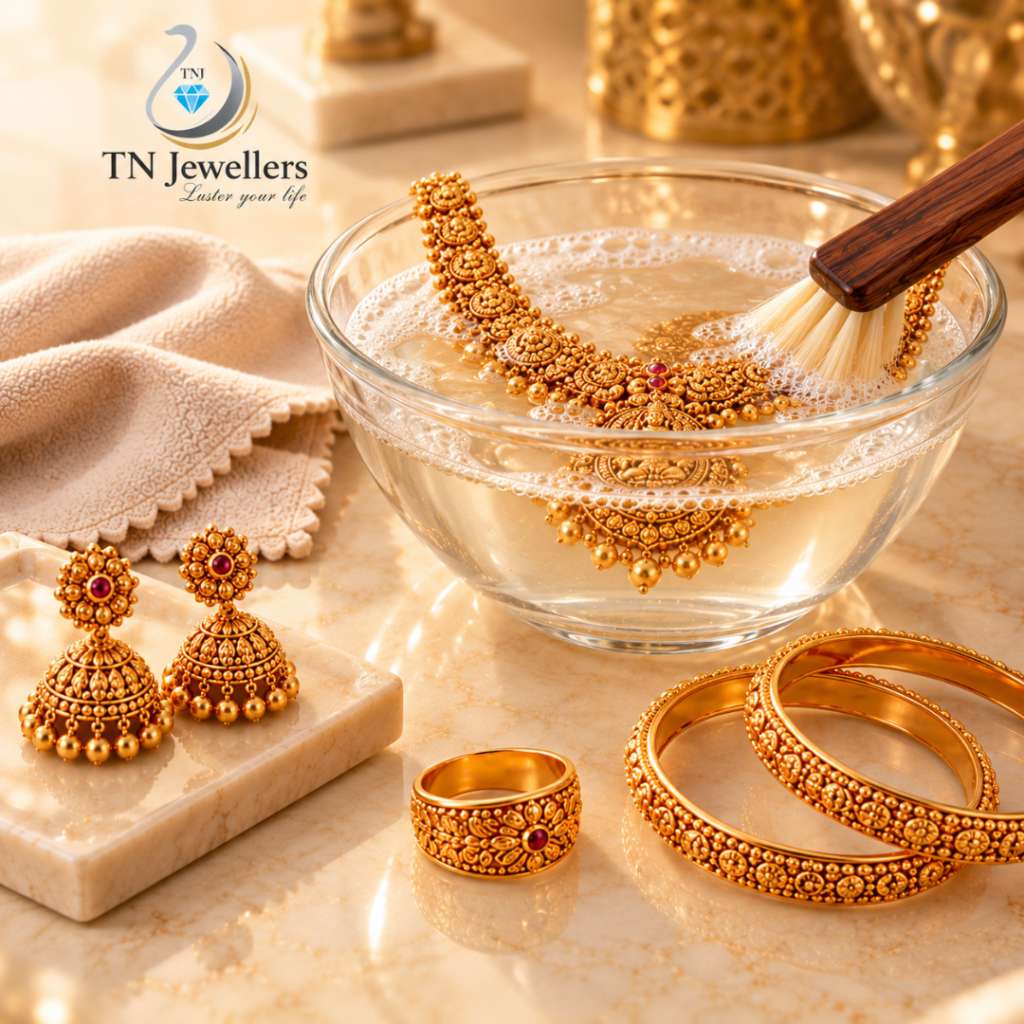
For basic cleaning, gold jewellery can often be gently cleaned using a soft approach.
Use a bowl of lukewarm water with a small amount of mild soap. Place the jewellery in the solution briefly and gently clean it with a very soft brush if necessary.
After cleaning, rinse it carefully with clean water and dry it using a soft, lint-free cloth.
Avoid aggressive scrubbing. Gold jewellery can contain delicate details, settings, or gemstones that may be affected by rough handling.
If the jewellery is particularly valuable, heavily soiled, damaged, or contains delicate stones, professional cleaning may be the safer option.
How to Care for Silver Jewellery
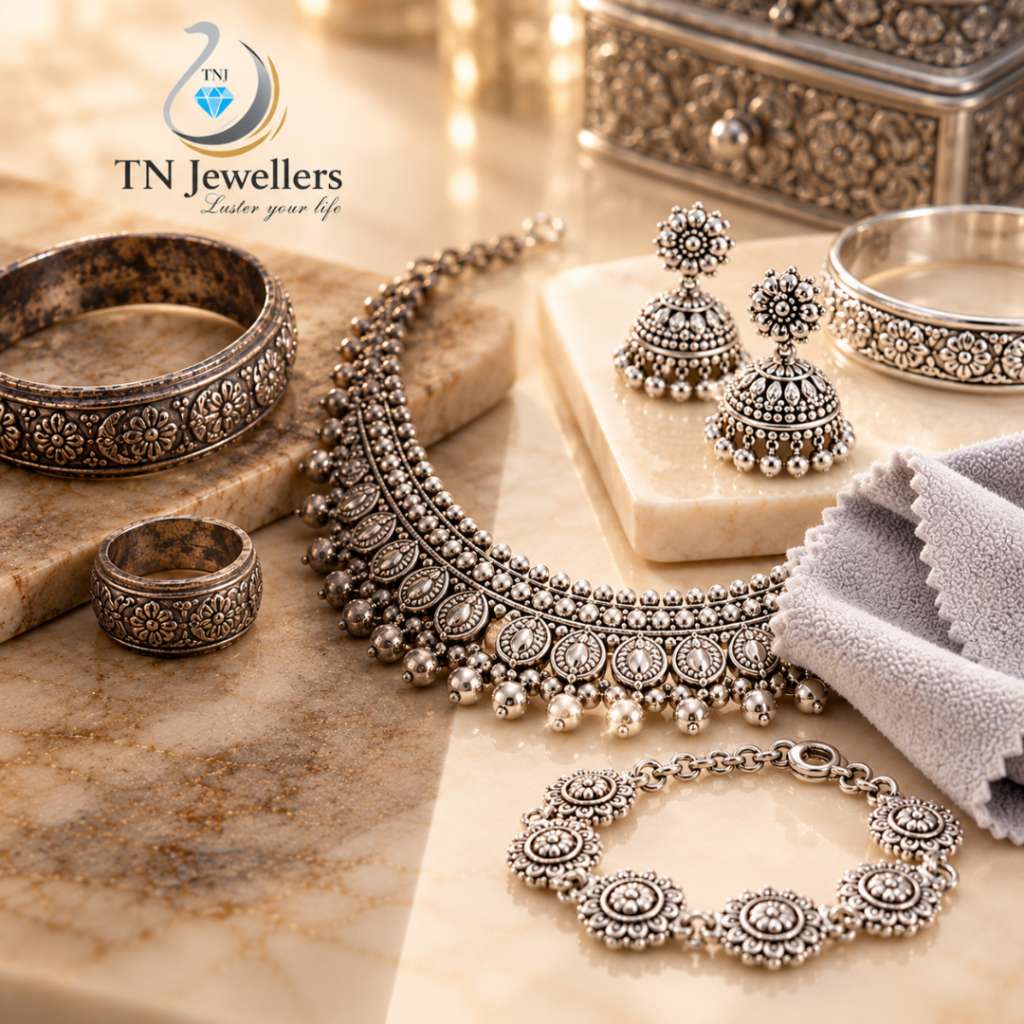
Silver jewellery requires slightly different care because tarnishing is a common issue.
Tarnish can make silver appear grey, yellowish, or dark. It does not necessarily mean that the jewellery is damaged beyond repair.
Regular maintenance and proper storage can help slow down tarnishing.
1. Keep Silver Dry
Keep your silver jewellery in a cool, dry place, as exposure to moisture can cause it to lose its shine and develop tarnish over time.
Avoid leaving silver jewellery in the bathroom, where humidity levels can be higher.
Once you’ve finished wearing silver jewellery, give it a gentle wipe with a soft, clean cloth before putting it away.
2. Store Silver Separately
Avoid throwing all your jewellery into one box.
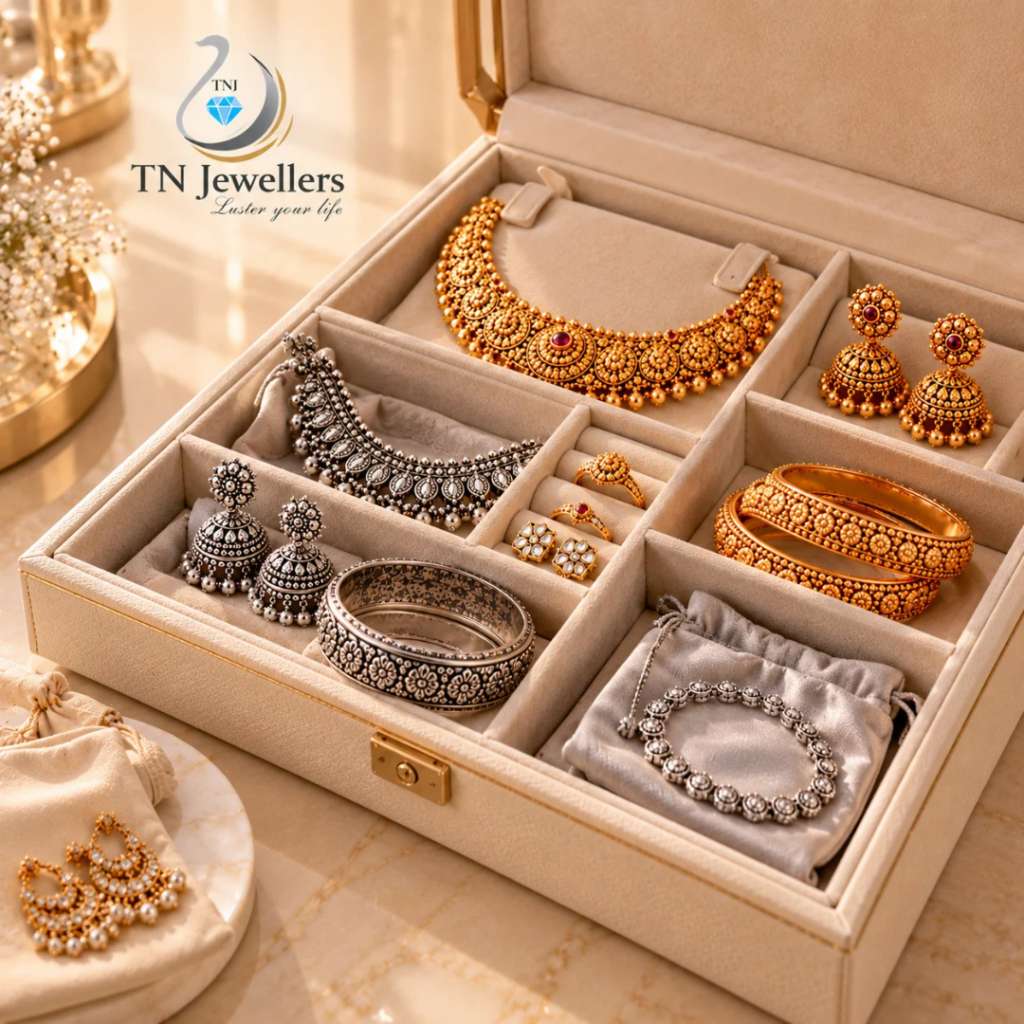
Silver pieces should ideally be stored separately to reduce scratching and unnecessary contact with other jewellery.
Soft pouches or individual compartments can be useful for keeping pieces separated.
3. Use an Anti-Tarnish Storage Method
Anti-tarnish jewellery pouches or storage materials can help protect silver from environmental exposure.
Keep silver jewellery in an airtight or well-protected container when it is not being worn.
The less exposure silver has to air and moisture, the easier it may be to maintain its appearance.
How to Clean Tarnished Silver Jewellery
Light tarnishing can sometimes be managed using a jewellery polishing cloth designed specifically for silver.
Gently rub the surface with the cloth without applying excessive pressure.
For valuable, antique, intricate, plated, or gemstone jewellery, avoid experimenting with strong homemade cleaning solutions. Some commonly suggested household methods can be too abrasive or unsuitable for particular finishes.
When in doubt, professional jewellery cleaning is a better choice.
Be Careful With Gold-Plated Jewellery
Gold-plated jewellery requires additional care because the gold layer on the surface can gradually wear away with frequent exposure to moisture, friction, chemicals, and cosmetics.
If you own gold-plated pieces:
- Keep them away from water whenever possible.
- Avoid perfume directly on the jewellery.
- Remove them before exercising.
- Store them separately.
- Do not use abrasive polishing materials.
- Handle them gently.
Unlike solid gold jewellery, plated jewellery should not be aggressively polished because excessive rubbing can affect the surface layer.

Take Extra Care of Gemstone Jewellery
Gold and silver jewellery may sometimes include diamonds, gemstones, pearls, or other decorative materials.
These pieces should be handled carefully because different gemstones have different physical and chemical properties.
Avoid assuming that a cleaning method suitable for plain gold will automatically be suitable for every gemstone.
Before using any cleaning solution, check whether it is appropriate for the particular stone and jewellery setting.
For valuable gemstone jewellery, professional cleaning and inspection can be a safer option.
Don’t Sleep While Wearing Jewellery
Sleeping with jewellery may seem harmless, especially when the piece is lightweight.
However, movement during sleep can create friction and put pressure on chains, clasps, earrings, and other delicate components.
Jewellery can easily get tangled or snagged while you sleep, especially chains, earrings, and delicate pieces, so it’s better to remove them before bed.
Removing jewellery before going to bed is a simple habit that can help reduce unnecessary wear.
Keep Jewellery Away From Water
Water itself does not automatically damage every gold or silver jewellery piece, but frequent exposure can contribute to dullness and may be particularly problematic for jewellery with gemstones, plating, or delicate finishes.
Remove jewellery before:
- Swimming
- Showering
- Washing dishes
- Cleaning
- Bathing
- Visiting a spa or sauna
This is especially important when the water contains chlorine or when cleaning products are involved.
Store Gold and Silver Jewellery Properly
Proper storage is one of the most important parts of jewellery care.
Instead of keeping all your pieces together, use a jewellery box with separate compartments.
Chains should ideally be stored in a way that prevents tangling. Rings and earrings should have their own spaces, while delicate pieces can be placed inside soft pouches.
For silver jewellery, use storage that limits exposure to air and humidity.
Avoid storing jewellery loose in drawers, where it can easily become scratched, tangled, or misplaced.
Clean Jewellery Regularly
Jewellery does not necessarily need intensive cleaning after every use.
However, gently wiping pieces with a soft jewellery cloth after wearing them can remove surface oils and residue.
Regular light maintenance is generally preferable to aggressive cleaning after a long period of neglect.
If a piece has accumulated significant dirt or appears damaged, professional cleaning may be appropriate.
Check Clasps, Hooks, and Settings
Taking care of jewellery goes beyond preserving its shine—it also helps protect its quality, appearance, and durability over time.
Inspect your jewellery occasionally for signs of wear.
Check:
- Necklace clasps
- Earring backs
- Bracelet locks
- Chain links
- Ring settings
- Stone settings
- Bangle joints
If you notice a loose gemstone, damaged clasp, broken link, or unusual movement, avoid continuing to wear the jewellery until it has been inspected.
Addressing minor jewellery issues early can help avoid further damage and prevent them from turning into more serious problems later.
Avoid DIY Cleaning Experiments
The internet contains many jewellery-cleaning tips involving household ingredients and strong chemicals.
While some methods may work for certain jewellery pieces, they are not universally safe.
Jewellery can differ in terms of metal purity, plating, gemstones, surface finish, and construction. A cleaning method that works on one item could potentially damage another.
For valuable gold or silver jewellery, especially pieces with gemstones or intricate craftsmanship, it is better to use an appropriate jewellery-cleaning product or seek professional advice.
How Often Should Jewellery Be Professionally Cleaned?
There is no single schedule that applies to every jewellery collection.
Frequently worn jewellery may benefit from periodic professional inspection and cleaning, particularly if it contains stones or intricate settings.
Professional jewellery care can help identify loose stones, worn clasps, damaged links, or other issues that may not be obvious during everyday use.
If a jewellery piece is particularly valuable or sentimental, regular inspection can be a sensible part of its long-term care.
Special Care for Wedding Jewellery
Bridal jewellery often contains intricate patterns, gemstones, detailed settings, and multiple connected components.
Because wedding jewellery may be stored for long periods between occasions, proper storage becomes especially important.
After wearing bridal jewellery:
- Gently wipe the pieces with a soft cloth.
- Make sure they are completely dry.
- Check clasps and settings.
- Store each piece separately.
- Keep the jewellery away from humidity and direct exposure to chemicals.
- Inspect it before wearing it again.
This routine can help keep your bridal jewellery ready for future celebrations.
A Simple Jewellery Care Routine
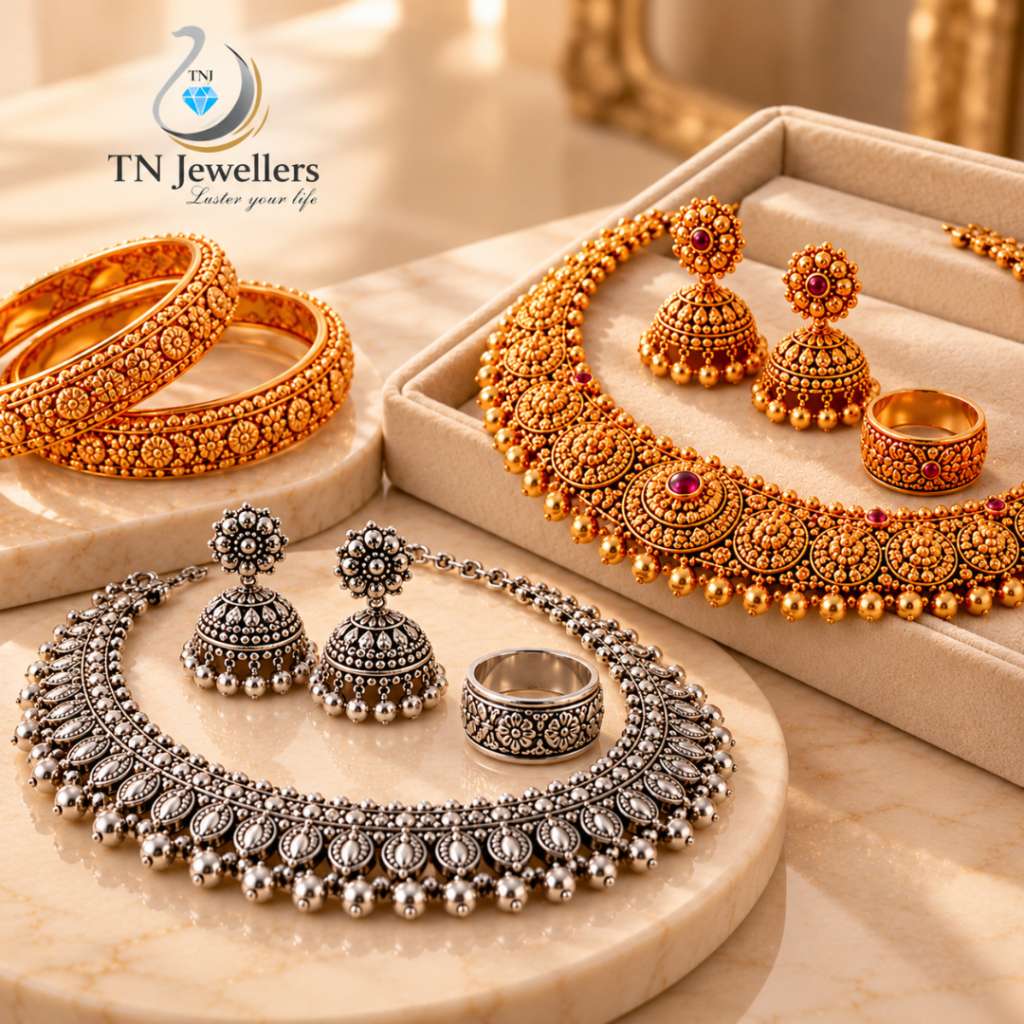
You can make jewellery maintenance easier by following a simple routine.
After wearing: Wipe jewellery gently with a soft, clean cloth.
Before bathing: Remove jewellery.
Before applying perfume or cosmetics: Finish your beauty routine first.
Before exercising: Remove jewellery.
Before swimming: Take off gold and silver jewellery.
During storage: Keep pieces separated in a dry, protected jewellery box.
Periodically: Inspect clasps, chains, settings, and stones.
When necessary: Consider professional cleaning or repair.
These small habits can make jewellery care much easier.
Choose Quality Jewellery and Care for It Properly
Good jewellery deserves good maintenance. When you purchase a gold or silver jewellery piece, understanding its purity, construction, finish, and care requirements can help you maintain it correctly.
Ask your jeweller about the recommended cleaning and storage method for your particular piece, especially when it includes gemstones, special finishes, or intricate craftsmanship.
At TN Jewellers Bikaner, customers looking for gold jewellery and other jewellery designs can explore options according to their personal style, occasion, and requirements.
Whether you are purchasing an everyday gold chain, silver jewellery, bridal jewellery, earrings, bangles, rings, or a statement necklace, proper care can help preserve its beauty.
Conclusion
Jewellery is often more than something we wear. A gold necklace may become part of a wedding memory, a ring may mark an important milestone, and a traditional piece may carry sentimental value through generations.
Keeping jewellery beautiful requires simple but consistent care. Protect gold and silver pieces from unnecessary exposure to chemicals, moisture, cosmetics, and excessive friction. Clean them gently, store them separately, and inspect them regularly.
For silver jewellery, pay particular attention to tarnishing and humidity. For gold jewellery, avoid harsh chemicals and abrasive cleaning. For gemstone or plated jewellery, always consider the specific material before choosing a cleaning method.
With the right care routine, your favourite jewellery can continue to look elegant and remain a cherished part of your collection.
If you are exploring gold and silver jewellery in Bikaner, TN Jewellers Bikaner can be a destination to discover jewellery designs for everyday wear, festive occasions, weddings, gifting, and special celebrations.
Beautiful jewellery deserves thoughtful care—and a little attention today can help preserve its shine for years to come.
You can gently clean gold jewellery at home using lukewarm water, mild soap, and a soft cloth. Avoid harsh chemicals, abrasive materials, and aggressive scrubbing, especially if the jewellery contains gemstones.
To keep gold jewellery shiny, remove it before bathing, swimming, exercising, or using chemicals. Avoid direct contact with perfume and cosmetics, wipe jewellery after wearing it, and store each piece separately in a dry jewellery box.
Keep silver jewellery dry and store it in a protected or anti-tarnish pouch. Avoid storing silver in humid areas such as bathrooms, and gently wipe it with a soft jewellery cloth after wearing it.
It is better to remove gold and silver jewellery before bathing or swimming. Soap, shampoo, moisture, chlorine, and other chemicals can contribute to dullness, tarnishing, or damage to delicate finishes and gemstones.
Store gold and silver jewellery separately in a dry jewellery box with individual compartments or soft pouches. Keeping pieces separated helps reduce scratches, tangling, moisture exposure, and unnecessary contact between different jewellery items.